
CASE STUDY
30 Minutes Demand Letters: How Law Practice AI Closes Cases Faster
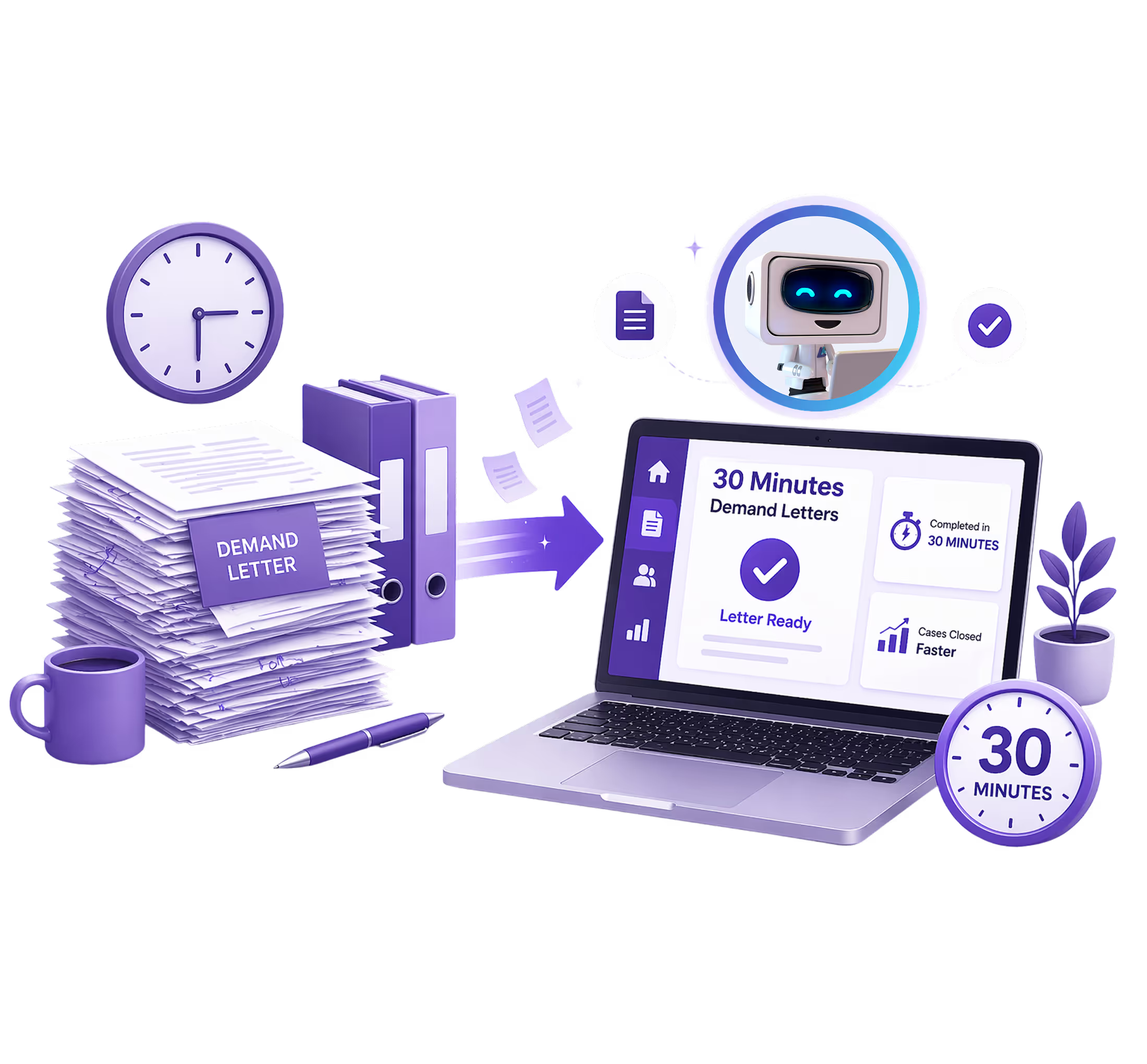
Law Practice AI increased throughout and accelerated settlement timelines for a Solo PI attorney handling high-volume Personal Injury cases.
- 1Solo PI Attorney
- 30 minsPer Demand Letter
- +$3kMonthly Savings
Solo Personal Injury Attorney
Demand Letter Automation
This case study shows how a Solo PI attorney reduced drafting time and closed settlement cycles faster by using Law Practice AI's Demand Letter Automation. Instead of spending hours drafting each letter manually, the firm used Law Practice AI to replace the entire drafting workflow with AI-generated liability analysis, damages summaries, medical summaries, and demand narratives.
Goals & Objectives.
The firm's primary goal was to reduce the time spent on manual demand letter drafting and accelerate settlement cycles to increase monthly revenue without adding staff.
To achieve this, the firm evaluated Law Practice AI's Demand Letter Automation as a direct replacement for manual liability review, damages calculation, medical record organization, and narrative writing.
To achieve this, the firm evaluated Law Practice AI's Demand Letter Automation as a direct replacement for manual liability review, damages calculation, medical record organization, and narrative writing.


The Problem.
Manual demand letter drafting was consuming hours of attorney time per case, creating inconsistencies in letter quality and dragging settlement cycles well beyond where they needed to be.
The attorney faced three compounding challenges that directly affected revenue:
The attorney faced three compounding challenges that directly affected revenue:

Manual drafting required an average of 3 to 5 hours per letter, pulling the attorney away from higher value case work.
Inconsistent letter quality across cases created more back-and-forth before each letter was ready to send.
Settlement cycles averaging 45 days meant cases were sitting longer than necessary, capping revenue potential without any clear path to improvement.

The Results.
By replacing manual demand letter drafting with Law Practice AI's Demand Letter Automation, the attorney cut draft time from 4 hours to 30 minutes, and grew monthly savings by $3k/month.

Metric | Before | After | Improvement |
|---|---|---|---|
Draft Time Per Letter | 4 hours | 30 minutes | 88% Faster |
Monthly Savings | 0 | +$3k | +$3K |
Letter Consistency | Variable | Structured | Standardized |

START YOUR FREE TRIAL
See How Fast Your Firm Can Close Cases With AI-Generated Demand Letters
Join solo attorneys already using Law Practice AI to cut drafting time, standardize letter quality, and close settlements faster. Try it free today, no credit card required.
Visit Law Practice AI to see how firms like yours are closing cases faster and growing monthly revenue