News or updates icon
Blog

Practice AI Blog

Explore how AI-driven solutions can automate routine tasks, allowing legal professionals to focus on more strategic activities.

These tools can assist in document review, legal research, and even predicting case outcomes, thereby increasing efficiency and accuracy.

Case Summary Generator for Law Firms: How to Pick the Right One

0
min read
June 10, 2026

Before a plaintiff attorney can draft a demand letter, someone has to read every medical record, extract the clinical findings, organize them by provider, and flag what is missing. That process takes hours.

A case summary generator built for law firms eliminates it.

There is no shortage of tools that claim to do this. Most of them accept a text input, run it through a general AI model, and return a paragraph that sort of describes what happened. For a law student reviewing a class assignment, that might be good enough.

For a plaintiff attorney preparing to draft a demand letter, it is not even close.

A purpose-built case summary generator reads the actual documents in your case file. It organizes findings by provider, by treatment date, by diagnosis. It surfaces the damage indicators your attorney needs before they ever open a file. And it does all of that while protecting the protected health information that runs through every case.

This article breaks down what separates a legal case summarizer that adds value from one that just adds more steps.

Key Takeaways

  • A case summary generator designed for law firms reads your actual case documents, not a pasted text block.
  • The most important factor when evaluating case summary software is whether it organizes output by provider, diagnosis, and treatment timeline automatically.
  • A general AI case summary tool is not the same as a purpose-built legal case summarizer. The difference shows up in clinical precision and output structure.

What Is a Case Summary?

A case summary is a structured document that condenses the key facts, medical findings, treatment history, and damages from a plaintiff case file into a format an attorney can review and act on quickly.

In a personal injury practice, a case summary covers the incident facts, every treating provider and their findings, the diagnosis with ICD codes, the treatment timeline, documented damages, and any gaps in the file that need to be addressed before drafting begins.

A well-organized case summary gives the attorney a complete picture of the case before they open a single record.

What Is a Case Summary Generator?

A case summary generator is a tool that reads the documents in your case file and produces that structured summary automatically.

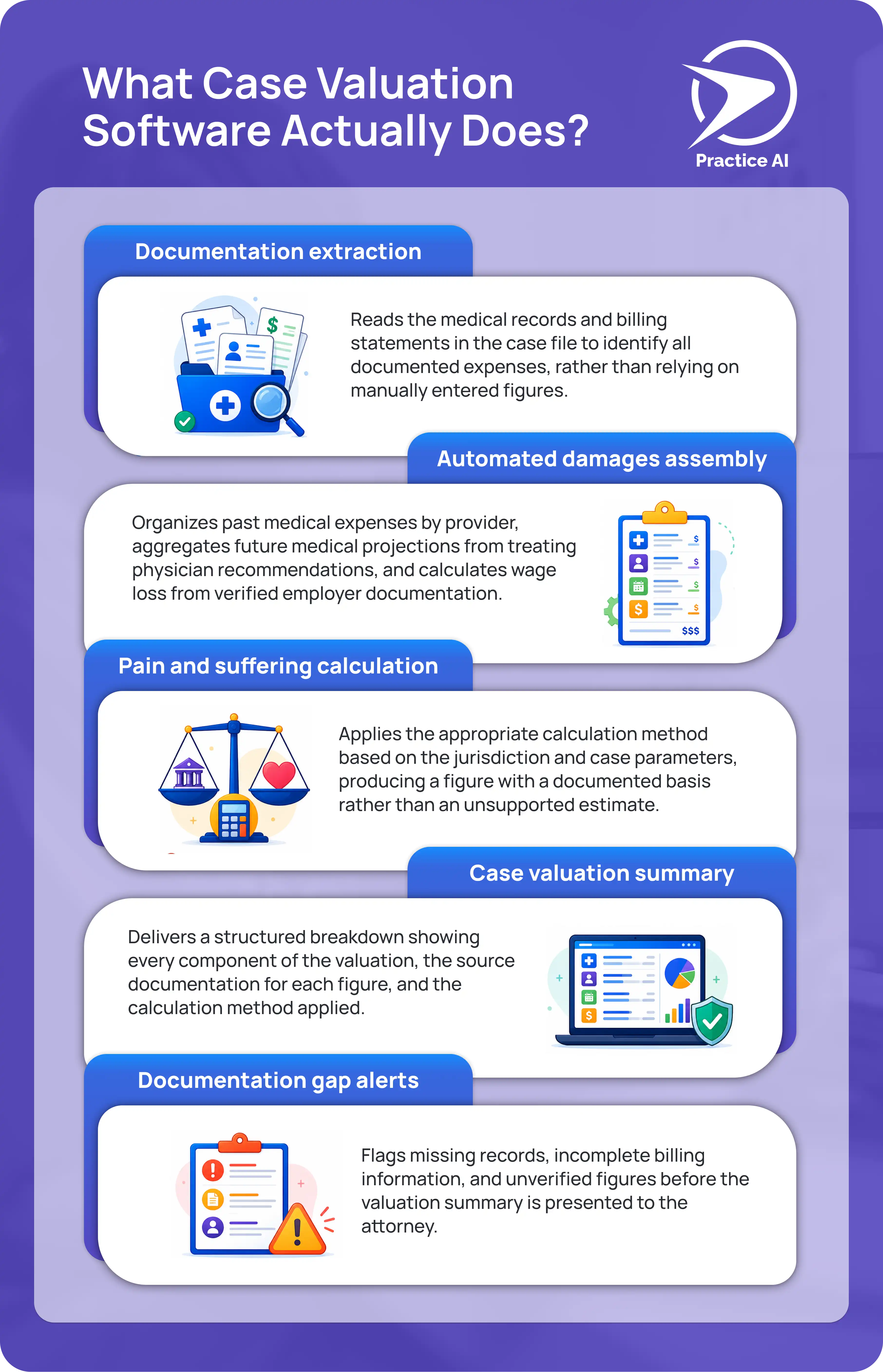
A purpose-built case summary generator for law firms goes further than compression. It reads uploaded documents, extracts clinical language from physician notes, organizes findings by provider and treatment date, calculates documented damages from billing records, and flags missing documentation before the attorney reviews the output.

The result is a structured, attorney-ready summary produced from your actual case materials, not from manually entered text.

Why a Case Summary Generator Matters for Plaintiff Law Firms

It Recovers Hours Your Team Spends Reading Records

Reading through dense medical records from multiple providers, extracting the relevant clinical findings, and organizing them into a usable structure is one of the most time-consuming tasks in a PI workflow.

A case summary generator does this automatically. The time recovered at this stage alone is significant, especially for firms managing high-volume caseloads.

It Catches What Manual Review Misses

Even experienced paralegals can miss a gap in the treatment timeline or an unverified billing figure when reviewing records manually under deadline pressure.

A purpose-built case summary generator flags missing provider records, timeline gaps, and unverified figures before the attorney opens the file so nothing slips through to the demand letter.

Why Most Case Summary Tools Fall Short for Law Firms

The general-purpose AI summarizer category has exploded. Tools built for students, journalists, and researchers now market themselves to law firms. The problem is that summarizing a news article and summarizing a set of plaintiff medical records are completely different tasks.

A news article has a clear narrative structure. A plaintiff case file has medical records from multiple providers, billing statements, imaging reports, ICD codes, treatment timelines, and insurance correspondence. Each piece requires different extraction logic and different organizational output.

What a Generic Case Summarizer Produces

A generic case summarizer accepts a block of text and returns a condensed version. It works by identifying the most prominent sentences and compressing the content.

What it cannot do is read a 40-page orthopedic evaluation, identify the ICD codes, extract the diagnosis and prognosis language, and organize that alongside the emergency department records from a different provider into a structured case summary ready for attorney review.

That is the gap. And that gap is the difference between a tool that saves your team hours and one that produces a paragraph your attorney has to fact-check before they can use it.

What Plaintiff Attorneys Actually Need From Case Summary Software

Plaintiff attorneys reviewing a PI case before drafting a demand letter need the following:

  • A complete medical chronology organized by provider and treatment date
  • Key diagnoses listed with clinical language sourced from the treating physician's notes
  • ICD codes for every documented injury
  • Damage indicators including total billed amounts, future medical projections, and wage loss
  • Flags for missing documentation or gaps in the treatment timeline

A legal case summarizer built for plaintiff practice delivers this structure automatically. A general case summarizer does not.

The 6 Things to Look for in a Case Summary Generator for Law Firms

AI robot holding a magnifying glass reviewing a legal document checklist with scales of justice and case management icons, 6 things to look for in a case summary generator for law firms by Law Practice AI.

Not all case summary generators are equal. These are the criteria that separate tools worth using from tools that create more work than they save.

1. Reads Your Actual Case Documents

The most important question to ask any case summary software vendor is whether the tool reads your actual uploaded documents or whether it asks you to paste in text.

A tool that reads uploaded files processes the raw source material. A tool that accepts pasted text processes whatever your paralegal decided to type in. The second approach eliminates most of the time savings and introduces the possibility of transcription error.

An automated case summary built for law firms reads the files directly. PDFs, scanned records, and digital uploads should all be processable without manual re-entry.

2. Organizes Output by Provider and Treatment Timeline

A case summary that returns a single paragraph describing the plaintiff's injuries is not useful to a plaintiff attorney preparing to draft a demand letter.

The output needs to be structured. Provider by provider. Treatment date by date. Diagnosis by diagnosis. The attorney reviewing the summary should be able to move directly to the section covering the orthopedic evaluation without reading through everything else first.

3. Extracts Clinical Language

This is the difference between a legal case summarizer and a general case summarizer.

An ai case summary built for plaintiff practice uses the language the treating physician actually documented. When the orthopedist wrote "status post left knee meniscus repair with persistent anteromedial joint line tenderness," the summary should reflect that language, not paraphrase it as "knee injury."

Clinical precision matters because it is that language that appears in the demand letter. When the language in the demand mirrors the physician's notes, it is significantly harder for an adjuster to dispute.

4. Flags Documentation Gaps

A case summarizer that only processes what is there without identifying what is missing is only doing half the job.

Before an attorney reviews a summary, the platform should flag:

  • Missing provider records referenced in other documents
  • Gaps in the treatment timeline that could be used to dispute injury severity
  • Unverified wage loss figures without employer documentation
  • Incomplete billing records

Catching these before the attorney opens the file prevents the back-and-forth that extends case preparation time.

5. HIPAA Compliant and SOC 2 Certified

Every plaintiff case file contains protected health information. Any case summary software your firm uses must be HIPAA compliant and SOC 2 certified.

Law Practice AI is HIPAA compliant and SOC 2 certified. A signed Business Associate Agreement is executed with every firm before any client data enters the platform.

This means:

  • A signed Business Associate Agreement is in place before any client data enters the platform
  • All data is encrypted at rest and in transit
  • Uploaded documents and session data are not retained after the session ends and are never used to train or improve AI models 
  • No client data is used to train or improve the AI model

A general case summarizer that does not meet these requirements is not a viable option for a plaintiff law firm handling medical records.

6. Integrates With Your Existing Legal Software

Time savings from a case summary generator are significantly reduced if your team has to manually re-enter data between the summary tool and your case management platform.

Look for native integration with CASEpeer, Filevine, or SmartAdvocate. Case data should flow automatically into the summary workflow without manual re-entry. An automated case summary that connects to your existing software turns a multi-step process into a single workflow.

General Case Summarizer vs. Purpose-Built Legal Case Summarizer

Factor General Case Summarizer Purpose-Built Legal Case Summarizer
Input type Pasted text Uploaded documents
Output structure Single paragraph Organized by provider and timeline
Clinical language Paraphrased Sourced from physician notes
ICD codes Not included Extracted from medical records
Gap detection None Flags missing records and timeline gaps
HIPAA compliance Varies Required and verified
Legal software integration None Native with CASEpeer, Filevine, SmartAdvocate
Billing table extraction None Organized by provider and date

How Law Practice AI Case Summary Works

Law Practice AI’s Case Summary is an AI case summary generator tool built specifically for plaintiff law firms.

The platform reads every uploaded document in the case file: medical records, imaging reports, billing statements, provider correspondence, and produces a structured case summary organized by provider and treatment date.

Clinical language is extracted directly from the treating physician's notes. ICD codes are pulled from the source documentation. Damage indicators including past medical expenses, future medical projections, and wage loss figures are assembled from verified billing records.

Before the attorney reviews the summary, the platform flags any documentation gaps, missing records, or timeline inconsistencies that need to be addressed.

Every summary requires attorney review before it is used. No output leaves the platform without explicit attorney sign-off.

Law Practice AI is available on three plans starting at $97 per month. Case Summary is included in every plan and priced separately from Demand AI at $14.97 per additional summary.

See all plans and current pricing at Law Practice AI Pricing.

Frequently Asked Questions: Case Summary Generator for Law Firms

Q1: What is a case summary generator for law firms?

Q2: How is a legal case summarizer different from a general AI summarizer?

Q3: Is HIPAA compliance required for case summary software?

Q4: How does an automated case summary save time for PI attorneys?

Q5: Does Law Practice AI offer a free trial for its case summary tool?

The Right Case Summary Generator Does the Work Before the Attorney Opens the File

A case summary generator that works for a law firm does not ask your attorney to review a paragraph and figure out what it means.

It delivers a structured, organized summary where every finding is sourced from the actual documentation, every gap is flagged, and every damage indicator is ready to use before the attorney touches the file.

That is the standard worth holding any legal case summarizer to. Law Practice AI is built to meet it.

Book a Consultation to see how the case summary tool fits your plaintiff practice.

Browse more blogs

Should Law Firms Invest in AI in 2025? A Legal AI Guide

0
min read

Are you wondering if 2025 is the year for your law firm to embrace AI legal tools? The legal field is evolving rapidly, and artificial intelligence (AI) is becoming an essential tool for maintaining a competitive edge. But like many firms, you may have concerns about cost, disruption, or the impact on your team. Practice AI™ is here to help you navigate these uncertainties with confidence.

Let’s explore why AI is worth the investment, the barriers firms face, and how Practice AI can provide tailored solutions to address your concerns.

Table of Contents

  1. Why Law Firms Need AI Legal Tools
  2. Challenges and Concerns About AI Adoption
  3. How Practice AI Solves Key Challenges
  4. Step-by-Step Guide to Adopting Practice AI™

Why Law Firms Need AI Legal Tools

AI technology is reshaping the legal landscape by automating repetitive tasks, enhancing accuracy, and saving time. In 2025, law firms that fail to leverage AI risk falling behind in a market that demands efficiency and innovation. Key benefits include:

  • Streamlined Workflows: Automate tasks like demand letter drafting, legal research, and compliance checks with AI-powered legal writing and legal document automation tools.
  • Increased Accuracy: Reduce human errors with AI for legal professionals, AI-powered tools designed for precision.
  • Cost Savings: Free up valuable time for attorneys to focus on high-value tasks rather than administrative duties— a game-changer for legal and professional services.
  • Improved Client Outcomes: Faster turnaround times and higher-quality work improve client satisfaction and loyalty. This is especially valuable in practice areas like personal injury demand letters and lemon law demand letters, where efficiency directly impacts case success.

Challenges and Concerns About AI Adoption

Law firms often hesitate to adopt AI due to common concerns, such as:

  1. Cost of Implementation: Worries about the upfront investment and long-term expenses.
  2. Disruption to Workflow: Concerns about how AI will integrate into existing systems and processes.
  3. Data Privacy and Security: Fear of breaches when sensitive information is involved, especially in areas like AI in data security and AI HIPAA compliance.
  4. Job Security: Misconceptions that AI will replace human employees rather than complement them.

How Practice AI Solves Key Challenges

Practice AI understands these concerns and offers solutions designed specifically for law firms.

  1. Affordability: Practice AI provides cost-effective tools like Demands and AI Doc Summary, ensuring firms of all sizes can access the best AI for lawyers without breaking the budget.
  2. Seamless Integration: Our products, including AI legal document generator and AI legal assistant solutions can integrate easily into your existing workflows, minimizing disruption and enabling your team to adopt new processes quickly.
  3. Robust Data Security: Practice AI prioritizes data security in AI with advanced encryption and compliance with legal industry standards, safeguarding sensitive client information.
  4. Empowering, Not Replacing: Practice AI enhances human capabilities by automating repetitive tasks, allowing attorneys to focus on strategy, advocacy, and client engagement, ideal for law firms looking for time-saving AI for lawyers, not job-replacing bots.

Step-by-Step Guide to Adopting Practice AI™

  1. Assess Your Firm’s Needs: Identify areas where AI can add the most value, such as document drafting, AI-powered demand letters, legal document automation, or AI Doc Summary™ for legal document  or medical record analysis.
  2. Schedule a Demo: Explore Practice AI’s tools through a live demonstration to see how exploring AI for law firms or expanding into AI for personal injury lawyers work in real-world scenarios.
  3. Involve Your Team: Include key stakeholders in the decision-making process to ensure buy-in and smooth adoption of AI in the legal field.
  4. Start Small: Begin with one or two tools, such as Demands or AI Doc Summary, and gradually expand as your team becomes comfortable.
  5. Provide Training: Practice AI offers training resources to ensure your team understands how to maximize the tools’ potential — whether they need help with AI-generated legal documents, document summarization, or automating legal documents.

2025 is the year to invest in AI for your law firm. The potential for improved efficiency, accuracy, and client outcomes is undeniable, and Practice AI is your partner in this transformative journey.

Don’t let concerns hold you back. With affordable, secure, and user-friendly tools like Demands and AI Doc Summary, Practice AI addresses the challenges of AI adoption while delivering tangible benefits.

Automate your next demand letter with Practice AI™.

From AI-powered legal writing to medical records analysis, our tools like AI Demands™ and AI Doc Summary™ help law firms boost efficiency, accuracy, and client outcomes. Sign up today and empower your firm to lead in 2025 and beyond.

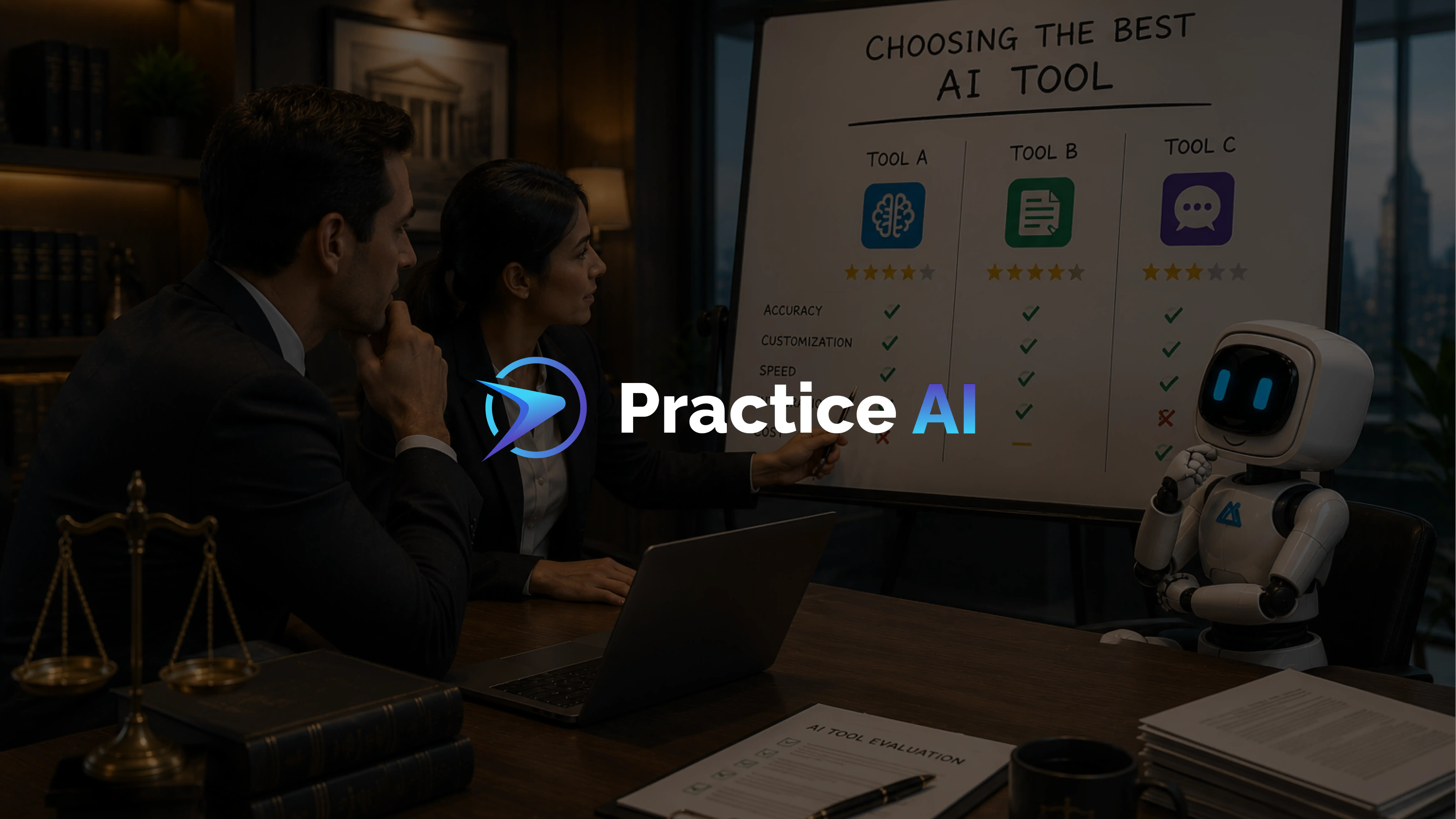
Two attorneys reviewing a whiteboard comparison of AI tools rated on accuracy, customization, speed, and cost for demand letter generation by Law Practice AI

Top 3 Personal Injury Demand Letter Generation Tools

0
min read

Demand letters play a critical role in personal injury cases, serving as the formal request for compensation from the at-fault party or their insurance company. A well-crafted demand letter clearly outlines the facts of the case, details the injuries sustained, and specifies the compensation sought. It's often the first step in securing a fair settlement and can set the tone for negotiations.

Traditionally, demand letter drafting is a time-consuming and meticulous process. However, AI-powered tools have emerged to streamline this task, helping law firms save time, reduce errors, and enhance their effectiveness. In this post, we'll explore the top three personal injury demand letter generation tools.

Table of Contents:

  1. Why Are Demand Letters Important?
  2. AI Demand by Practice AI
  3. Filevine's DemandsAI
  4. Evenup Demands
  5. Choosing the Best AI Tool for Demand Letter Creation

Why Are Demand Letters Important?

Demand letters are more than just paperwork, they are strategic documents that can significantly impact the outcome of a personal injury case. A strong demand letter:

  • Sets the Foundation for Negotiations: It establishes the facts and the basis for the claim such as personal injury claim, helping to prevent misunderstandings.
  • Demonstrates Serious Intent: It signals to the opposing party that the plaintiff is prepared to pursue legal action if necessary.
  • Aims to Maximize Compensation: By clearly outlining damages, medical expenses, and their impact, a well-drafted settlement demand letter can lead to faster and more favorable settlements.

Let's compare three of the best options available.

AI Demand by Practice AI

Overview:
AI Demand by Practice AI is specifically designed to streamline the creation of demand letters for personal injury law firms. It focuses on speed, accuracy, and compliance with U.S. personal injury legal standards.

Key Features:

  • Quick Drafts: Generates detailed demand letters in minutes, reducing the time spent on manual drafting.
  • Built-in Compliance: Ensures that all letters align with personal injury statutes and legal frameworks.
  • Customizable Templates: Provides pre-built templates for various types of personal injury cases, which can be tailored to individual client needs.
  • Unlimited Revisions: Allows continuous refinement to ensure the demand letter meets case-specific requirements.

Why It Stands Out:
AI Demand offers a user-friendly, cost-effective solution tailored specifically for personal injury law. Its focus on legal compliance and customizable templates makes it accessible for firms of all sizes. The tool's unlimited revision feature also ensures that the final letter is polished and persuasive​.

Considerations:

  • As a newer tool, user feedback is still developing.
  • Best suited for firms focusing primarily on personal injury cases as of December 2024.

Filevine's DemandsAI

Overview:
Filevine's DemandsAI is designed to automate and streamline the creation of demand letters. Integrated with Filevine's case management platform, it uses existing case data to generate detailed and persuasive demand letters quickly.

Key Features:

  • Automation: Generates demand letters in minutes, pulling relevant data directly from case files.
  • Data Integration: Seamlessly integrates with Filevine's case management system, ensuring accuracy and consistency.
  • Customization: Offers adaptable templates for various types of personal injury cases.
  • Professional Review: Optional legal expert review ensures high-quality outputs.

Why It Stands Out:
Filevine's DemandsAI is ideal for firms already using the Filevine platform. It reduces the need for manual data entry and ensures that demand letters are consistent and accurate. The tool's integration with case management software helps maintain a smooth workflow​

Considerations:

  • Best suited for firms within the Filevine ecosystem.
  • Some manual oversight may still be needed to capture case-specific nuances.

Evenup Demand Letter

Overview:
Evenup focuses on maximizing settlements by generating data-driven demand letters tailored to specific personal injury cases. It uses insights from a database of past settlements to help justify the compensation requested.

Key Features:

  • Data-Driven Valuations: Compares case details to similar past settlements to suggest appropriate compensation amounts.
  • Narrative Support: Helps build compelling narratives around the plaintiff's injuries and their impact on quality of life.
  • Custom Templates: Provides templates for various injury types, such as car accidents, slip-and-falls, and dog bites.

Why It Stands Out:
Evenup's strength lies in its data-driven approach. By benchmarking against past cases, it helps attorneys justify their compensation demands with solid evidence. This can lead to higher settlements and more successful negotiations​..

Considerations:

  • There may be a learning curve to fully utilize its benchmarking features.
  • Customization can require additional input to align with specific firm standards.

Choosing the Best AI Tool for Demand Letter Creation

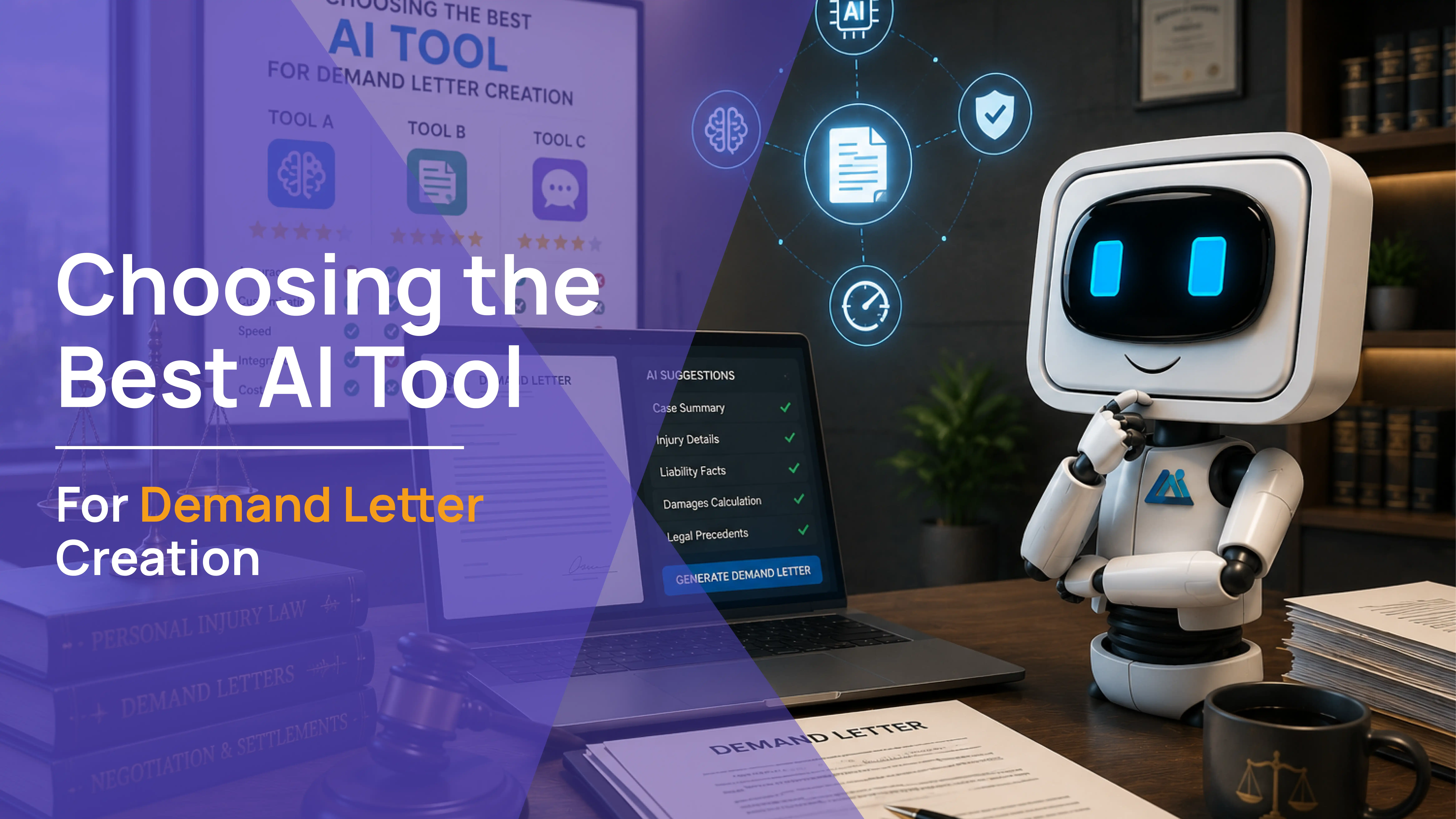
AI robot beside a laptop showing AI suggestions for case summary, injury details, and damages calculation with a generate demand letter button, choosing the best AI tool for demand letter creation

Demand letters are a crucial part of personal injury cases, setting the stage for successful negotiations. Choosing the right AI tool depends on your firm's specific needs and workflow:

  • Filevine's DemandsAI: Ideal for firms already using the Filevine platform, offering seamless integration and consistent data handling.
  • Evenup: Best for maximizing settlements with data-driven valuation insights and detailed narrative support.
  • AI Demand by Practice AI: A user-friendly, compliant, and cost-effective solution tailored specifically for personal injury law, perfect for firms of all sizes.

Each tool offers unique benefits, so consider what aligns best with your firm's requirements, whether it's integration, accuracy, or settlement optimization.

Explore Demands AI today and see how it can transform your demand letter process.

Two attorneys reviewing a personal injury demand letter on a laptop alongside an AI robot with scales of justice on the desk.

5 Steps to Craft an Efficient Personal Injury Demand Letter with AI Demand

0
min read

Creating a compelling personal injury demand letter is crucial for maximizing settlements. It needs to clearly outline the facts, damages, and the financial compensation that is sought, all while being persuasive and legally sound. Traditionally, drafting these letters can take hours and require meticulous attention to detail. But with AI Demand, this process becomes faster, easier, and more accurate.

You would be surprised to know that it only takes 5 simple steps to generate your demand letter once you sign up. Sign up with Practice AI now and explore AI Demand.

Steps:

  1. Upload & Input Accurate Case Details
  2. Customize for Specific Injuries
  3. Highlight Key Damages
  4. Review and Refine
  5. Ensure Compliance

1. Upload & Input Accurate Case Details

The foundation of any strong demand letter is accurate information. Start by gathering all relevant case details, such as:

  • Case summaries
  • Medical records
  • Medical chronologies
  • Witness statements
  • Police reports
  • Photos of injuries or property damage

With AI Demand, you can upload these documents directly into the platform. The fully AI-powered assistant uses this data to generate a detailed draft that covers all critical aspects of the case. Accurate input ensures that the generated demand letter reflects the true nature and extent of the personal injury claim, strengthening your negotiation position in a personal injury case.

2. Customize for Specific Injuries

Every personal injury case is unique, and your demand letter should reflect that. AI Demand offers pre-built templates for various types of cases, including:

  • Motor vehicle accidents, such as a car accident case (Including global policy, regular time limit: and third policy case types)
  • Slip and fall incidents (Premise liability cases)
  • Dog bites

These templates are designed to address specific injury scenarios. Once you select the appropriate template, customize it to highlight the client’s unique situation and add your own logo and letter templates.

3. Highlight Key Damages

A successful demand letter clearly outlines the damages being claimed. AI Demand helps you categorize and present both economic and non-economic damages:

  • Economic Damages: These include medical expenses, lost wages, and future treatment costs. AI Demand ensures that all documented expenses are accurately represented, leaving no room for dispute.
  • Non-Economic Damages: These cover pain and suffering, emotional distress, and loss of enjoyment of life. AI Demand can help quantify these damages, providing a clear and justified request for compensation.

By organizing and presenting these damages effectively, your demand letter demonstrates the full impact of the injury, making a stronger case for fair compensation.

4. Review and Refine

One of the standout features of AI Demand is its ability to generate high-quality drafts quickly. But every case is unique, and a human touch is essential. 

With AI Demand, you can revise and tailor the language to emphasize how the injuries have impacted their life, both physically and emotionally. The unlimited number of revisions to personalize your generated demand letters make them more compelling and relatable.

Use AI Demand’s unlimited revision feature to:

  • Review the draft for accuracy and completeness
  • Ensure the tone aligns with your case strategy
  • Make adjustments based on client feedback

This collaborative process ensures that the final settlement demand letter is polished, persuasive, and perfectly tailored to the case. With AI Demand, you save hours of drafting and revising time, allowing you to focus on other critical aspects of your practice.

5. Ensure Compliance

A demand letter must adhere to established legal statutes and standards. AI Demand is designed to generate letters that comply with U.S. personal injury law requirements and statutes. This includes:

  • Properly documenting and presenting damages
  • Ensuring all relevant legal points are covered
  • Maintaining a professional and respectful tone

Compliance is crucial to avoid challenges from insurance adjusters or opposing counsel. AI Demand’s built-in legal knowledge helps you meet these standards, reducing the risk of errors and increasing the likelihood of a favorable settlement.

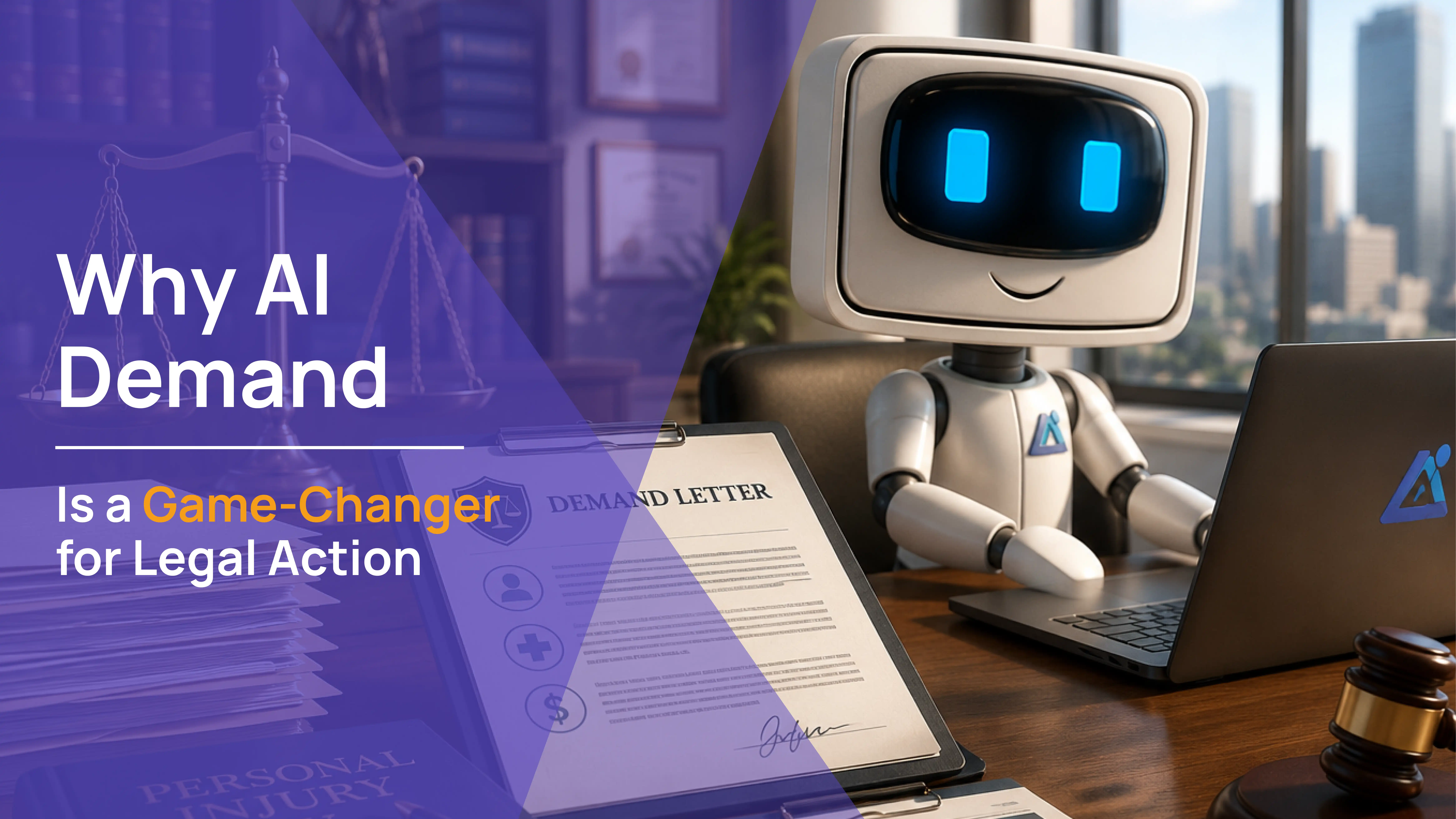
Why AI Demand™ is a Game-Changer for Legal Action

AI robot at a laptop beside a signed personal injury demand letter on a clipboard, why AI Demand is a game changer for legal action.

Tired of spending hours drafting a personal injury demand letter? With AI Demand™, you can create powerful, legally sound letters in minutes. Whether you're dealing with a car accident, medical malpractice, or a wrongful death case, this tool ensures your settlement demand letter is precise, persuasive, and packed with the right details. It helps you maximize financial compensation by organizing medical records, detailing economic damages, and presenting a compelling case to insurance adjusters. Get your personal injury claim started the right way, fast, effective, and stress-free.

Start Streamlining Your Demand Letters with AI Demand NOW!

Crafting an efficient personal injury demand letter doesn’t have to be a time-consuming or stressful process. With AI Demand, you can generate detailed, compliant, and persuasive letters in minutes, not hours. By following these five steps, you ensure that every demand you send is accurate, compelling, and tailored to your client’s needs.

Ready to transform your demand letter writing process?

Sign up with Practice AI now and explore AI Demand.

Enhancing Patient Outcomes with AI Doc Summary: AI-Powered Medical Document Summaries

0
min read

Medical professionals, from doctors to medical assistants, require records and documents to provide the best care for their patients. The accuracy and timeliness of patient record analysis can greatly affect patient outcomes. However, this means dedicating hours to generating summaries or analyses or using tools that may not always guarantee compliant and accurate summaries. This has created the need for efficient and accurate document summarization and review, driving innovation in AI-powered solutions and expanding careers in artificial intelligence within the healthcare industry.

Our fully AI-powered legal and medical solution, AI Doc Summary, focuses on transforming the way both medical and legal professionals handle document reviews by analyzing multiple documents and files and generating summaries with precision. This ensures that crucial information is swiftly and accurately identified. AI Doc Summary can be used by both AI for medical professionals and AI for legal professionals to apply to their medical and legal workflows.

Table of Contents:

  1. The Growing Need for AI in Medical Document Review
  2. How AI Doc Summary Enhances Patient Care
  3. Real-World Impact on Patient Outcomes
  4. Getting Started with AI Doc Summary

The Growing Need for AI in Medical Document Review and Compliance

The rapid growth of medical information technology has created challenges for healthcare providers, who find it difficult to manage the ever-increasing amount of data. 

From patient histories to treatment plans, each document contains vital information that must be understood and acted upon swiftly. AI Doc Summary is designed with precision and speed in mind, eliminating a large portion of the manual work needed for document summaries.

How AI Doc Summary Enhances Patient Care

  1. Accurate Summaries: One of the standout features of AI Doc Summary is its ability to swiftly generate accurate AI-powered legal writing summaries from complex medical records. This capability allows healthcare providers to quickly understand the main points and pertinent details, freeing up time to focus on patient care and critical decision-making.
  2. Highlighting Key Details: Missing key details can be disastrous in patient care. AI Doc Summary is designed to scan documents meticulously and highlight critical information, ensuring that no essential detail is overlooked. This feature is instrumental in developing comprehensive treatment plans and making informed decisions.
  3. Reducing Errors: Human error is inevitable, especially when dealing with vast amounts of information under tight deadlines. AI Doc Summary reduces these errors by providing a more reliable document review process. With its ability to analyze information accurately, healthcare professionals can be confident in the decisions they make, based on dependable data. As careers in artificial intelligence continue to grow, AI-driven tools like AI Doc Summary are not only enhancing efficiency and accuracy in medical workflows but also shaping the future of AI-driven healthcare solutions.
  4. Review & Revise as Needed: Revising summaries or analyses can be a time-consuming and redundant process, and it may lead to complications with document control. With Demands AI, medical professionals can make adjustments and edits if necessary, ensuring that all generated summaries meet their requirements.

Real-World Impact: AI-Driven Accuracy for Better Patient Outcomes 

Consider a scenario where a patient's treatment plan needs urgent revision based on the latest test results. With AI Doc Summary, medical teams can quickly identify and act on key information, reducing the time taken from diagnosis to treatment. Such efficiency not only optimizes resource use but can significantly improve AI for healthcare legal cases like patient outcomes by ensuring timely and accurate interventions.

Getting Started with AI Doc Summary

Adopting AI Doc Summary into your healthcare practice is simple and rewarding. The tool is designed for intuitive use, making integration seamless for medical teams seeking to enhance their document management in healthcare such as document review processes. 

By offering a clear and user-friendly interface, AI Doc Summary ensures that healthcare professionals can adapt quickly and start reaping the benefits almost immediately.

Transform Your Document Workflow

Adopt AI Doc Summary to simplify document review, improve efficiency, and help healthcare teams manage medical documents with ease.

Special Offer for CAALA Members: Demand Generation Benefit Package

0
min read

What is AI Demand by Practice AI?

AI Demands™ by Practice AI™ is a cutting-edge tool designed to streamline the creation of personal injury demand letters. It automates the process, ensuring that lawyers can produce professional, accurate, and legally compliant demand packages in just minutes. This powerful AI legal document generator allows attorneys to focus on more strategic aspects of their practice.

AI Demand streamlines the process of creating professional, accurate, and legally compliant demand packages in just minutes. With pre-built templates for various personal injury cases, including motor vehicle accidents (global policy, regular time limit, and third policy cases), slip-and-fall incidents, and dog bites, personal injury lawyers can efficiently produce tailored documents. 

Personal injury lawyers can also revise and customize the language to highlight the physical and emotional impact of injuries, ensuring the final personal injury demand letter is polished, persuasive, and perfectly suited to the case. By saving hours of drafting and revision, AI Demands™ enables lawyers to focus on other critical aspects of their practice.

Benefits of Using AI Demands:

  • Save Time on Demand Letters: Writing letters from scratch takes time. AI-powered demand letters quickly create detailed, professional letters, so you can focus on other priorities.
  • Ensure Accuracy and Quality: AI legal document automation tools provide precision, reducing errors and ensuring every demand meets legal standards.
  • Boost Efficiency: Handle more cases with ease, enhancing productivity and client service with AI for law firms.
  • Stress-free Security & Compliance: Built with the highest standards of data security in AI and privacy. Our platform runs on infrastructure that is compliant with GDPR, HITRUST (HIPAA), ISO 27001, SOC-2, and CCPA.
  • Reduce Team Burnout: Drafting letters can be repetitive and draining. AI Demands takes care of it, allowing your team to focus on meaningful work and stay motivated.
  • Do What Matters Most: Time spent drafting is time away from important tasks like negotiations or client care. AI Demands™ helps you focus on what truly matters by leveraging legal AI solutions to automate demand letters effectively.

Exclusive Advantages for CAALA Members:

As a proud partner of Legal Soft, sponsoring recent CAALA events, we are now providing benefit packages for CAALA members. This offer allows you to experience the full benefits of AI Demands at no cost, maximizing efficiency and keeping your practice competitive with AI-powered legal writing.

How CAALA Members Can Sign Up:

  1. Visit www.lawpractice.ai.
  2. Sign up and subscribe to AI Demands.
  3. Start generating professional personal injury demand letters in minutes!
  4. Email support@mylawfirm.ai to confirm your CAALA membership and activate your benefit package.

Don’t miss this opportunity to streamline your law firm’s workflow, leverage AI-generated legal documents, and enhance your practice

How AI-Powered Tools Empower Legal and Medical Professionals

0
min read

Artificial intelligence (AI) is transforming how professionals work—especially in the legal industry and medical fields. This powerful AI technology isn't about replacing experts but helping them do their tasks better and faster. AI-powered tools can take care of routine tasks, handle complex data, and provide insights that enhance decision-making in both legal practice and medical fields.

Table of Contents:

  1. What Is the Impact of AI in Legal Industry and the Medical Field?
  2. What Are the Common Misconceptions About AI?
  3. Can ChatGPT Handle Legal AI Solutions and Medical AI Solutions?
  4. Meet Practice AI Solutions - Demands AI & AI Doc Summary
  5. Why Practice AI Solutions?Summary: How Can AI Empower Professionals Like You?

What Is the Impact of AI in Legal Industry and the Medical Field?

AI tools are growing quickly and finding their way into more industries. For legal and medical professionals, AI isn’t just a buzzword—it’s becoming a vital tool for getting things done efficiently.

According to LITSLINK, AI is already easing healthcare providers' workloads and boosting time for clinical work, making it an essential asset for modern medical professionals.

The same is becoming true in the legal profession—AI tools are helping lawyers, paralegals, and legal assistants spend less time on paperwork and more time on strategy, client interaction, and case outcomes.

AI In the legal field:

AI for legal professionals can help with tasks like drafting personal injury demand letters, reviewing specific contracts and legal documents, and researching case laws. Instead of spending hours on paperwork, lawyers can focus on meeting clients, creating strategies, and negotiating settlements. AI for law firms is helping both larger firms and smaller firms improve efficiency and accuracy.

AI In the medical field:
AI solutions can assist doctors and other health care professionals by analyzing patient records, identifying patterns, and even helping with diagnoses. This saves time and reduces the risk of human error, leading to better patient outcomes. By taking care of repetitive tasks, AI lets professionals concentrate on what they do best—applying their expertise to solve complex problems.

What Are the Common Misconceptions About AI?

There’s a lot of misunderstanding about AI. Let's clear up a couple of common myths:
Myth 1: Will AI replace human professionals?
The truth is, AI is a tool—not a replacement. It works alongside professionals, handling routine or time-consuming tasks so experts can focus on higher-level work. For example, AI can draft a contract or retainer, but a lawyer or legal professional still needs to review it to ensure it meets client needs and legal standards.
Myth 2: Is AI too complicated to use?
Many professionals resist AI technology because they think it’s hard to use. In reality, today’s AI-powered tools are designed to be user-friendly. Training and education can help medical or legal teams see AI as a partner, not a threat. The goal is to enhance human skills, not replace them.

Can ChatGPT Handle Legal AI Solutions and Medical AI Tasks?

ChatGPT is reshaping how legal and medical professionals handle complex documentation and compliance. From drafting AI-powered demand letters to AI medical record summarization, it streamlines tedious tasks, allowing professionals to focus on what truly matters—clients and patients.
For lawyers, AI for legal professionals streamlines demand letter generation, accelerating the creation of personal injury demand letters and lemon law demand letters, making case preparation more efficient. In healthcare, AI for healthcare legal cases ensures precise analysis while maintaining AI legal compliance and AI document security.
By embracing AI-powered legal and medical solutions, professionals can enhance accuracy, save time, and optimize workflow, ensuring a more efficient future for both industries.

Meet Practice AI Solutions - Demands AI & AI Doc Summary

At Practice AI, we understand the unique challenges legal and medical professionals face. That’s why we’ve developed specialized AI tools—Demands AI and AI Doc Summary—to meet your specific needs.

How Does Demands AI Improve Personal Injury Demand Letters?

Personal injury demand letters are critical in legal cases. They need to be detailed, persuasive, and legally sound. Demands AI generates comprehensive personal injury demand letters quickly and accurately.
Advantages:

  • Understands Legal Language: Demands AI is built with knowledge of personal injury law, ensuring your letters are thorough and compliant.
  • Offers Customizable Pre-built Templates: Demands AI offers pre-built templates for a variety of personal injury cases, such as motor vehicle accidents, dog bites, lemon law demand letters, premise liability, and slip and fall cases. Users can also customize these templates using their own branding.
  • Saves Time: Instead of spending hours drafting a letter from scratch, you can generate a high-quality draft in minutes.
  • Offers Unlimited Revisions: If you are not happy with the AI-generated demand letters, fear not; Demands AI allows you to review a demand letter and edit it as many times as you see fit.
  • Increases Success Rates: A well-crafted demand letter can lead to faster settlements. With Demands AI, you get professional, polished letters every time.


Experience the power of Demands AI. Sign up with Practice AI now and explore Demands AI.

How Does AI Doc Summary Simplify Document Review?

Reviewing medical and legal documents is time-consuming. AI Doc Summary makes it easier by summarizing and analyzing complex documents with high precision.
Key benefits:

  • Accurate Summaries: Quickly get the main points from long documents, so you can focus on what matters most.
  • Spot Key Details: AI Doc Summary highlights important information, ensuring nothing gets missed.
  • Reduces Errors: AI minimizes human mistakes, improving the reliability of your work.


Simplify document review with AI Doc Summary. Sign up with Practice AI now and explore AI Doc Summary.

Why Practice AI Solutions?

You might wonder why you should choose our specialized AI tools over general ones. Here’s the difference:

  1. Are These Tools Trained Specifically for Legal/Medical Needs? Demands AI and AI Doc Summary are created specifically for legal and medical professionals. They understand the language, context, and standards of legal statutes and medical regulations.
  2. Do They Offer Higher Accuracy? These tools are trained on industry-specific data, leading to more accurate and reliable results.
  3. Can They Save Time and Money? Automating routine tasks using Practice AI tools allows you to save valuable time, boosting productivity while also helping you achieve a better work-life balance.
  4. Can They Help with Your Legal/Medical Practice’s Results and Settlements? Demands AI and AI Doc Summary are designed to enhance both efficiency and accuracy, leading to enhanced results and maximized settlements for your practice and clients.

Ready to transform your workflow? Sign up with Practice AI now and explore Demands AI & AI Doc Summary.

How Can Practice AI Empower Lawyers and Doctors Like You?

AI is here to help, not replace. It’s about working smarter, not harder. By automating routine tasks and improving accuracy, Practice AI allows legal professionals such as paralegals, case managers, legal assistants, and medical professionals such as healthcare workers and medical assistants to focus on what they do best—providing expert care and service.

Choosing the right AI tools is crucial. Demands AI and AI Doc Summary are designed to meet the unique needs of legal and medical professionals. They offer the precision, reliability, and efficiency you need to excel.

Click here to explore Demands AI & AI Doc Summary and sign up for the trial to unlock your full potential.