

If your firm is ready to stop assembling case summaries manually and wants to see what AI case summary generators actually look like in a PI workflow, this article is for you.
Most AI case summary generators were built for general document compression. They accept a block of text, identify the most prominent information, and return a shorter version. That output has no place in a PI demand letter workflow where the attorney needs clinical language extracted from actual physician notes, ICD codes from source records, and a damage picture assembled from verified billing data.
Law Practice AI's AI case summary generator was built specifically for plaintiff practice. It reads the actual documents in your case file, organizes findings by provider and treatment date, flags documentation gaps before the attorney opens the file, and connects directly to the demand letter workflow.
This article explains exactly what separates it from the general tools and why that distinction directly affects how fast your firm moves cases forward.
KEY TAKEAWAYS
- AI case summary generators built for PI firms read your actual uploaded case documents, not pasted text blocks.
- Clinical language in an ai case summary should mirror what the treating physician documented, not paraphrase it.
- The AI case summary generator your firm uses must be HIPAA compliant and SOC 2 certified before any medical records enter the platform.
- For PI firms at volume, a case summarizer for lawyers that integrates with CASEpeer, Filevine, or SmartAdvocate recovers significantly more time than a standalone tool.
How a PI Firm Uses an AI Case Summary Generator in Practice
Here is what the workflow looks like for a PI attorney using a purpose-built ai case summary generator on an active caseload.
Step 1: Upload the case documents. Medical records, billing statements, imaging reports, and provider correspondence are uploaded directly to the case file. No manual data entry.
Step 2: The platform processes the documents. The ai case summary generator reads every uploaded file, extracts clinical findings, organizes the treatment chronology, and assembles the damage indicators from verified billing data.
Step 3: The attorney reviews a structured summary. The attorney opens a summary organized by provider, with clinical language from the physician notes, ICD codes for every documented injury, and a damages picture ready to use. The summary also includes any flags for missing documentation.
Step 4: The attorney moves directly to demand drafting. Because the summary is structured and complete, the attorney can begin demand letter preparation immediately rather than spending hours reviewing raw records.
Step 5: The attorney approves and the summary feeds into the demand letter workflow. The reviewed summary connects directly to the demand letter workflow. Clinical findings, damage figures, and ICD codes flow into the demand without manual transfer so the attorney drafts from the same verified data the summary was built from.
For PI firms producing case summaries across a high-volume caseload, the time recovered at this stage compounds quickly.
What General AI Case Summary Generators Get Wrong for PI Firms
General AI tools approach summarization the same way regardless of context. They read text, identify the most prominent information, and compress it into a shorter output.
That approach works for summarizing a meeting transcript or a research article. It does not work for a plaintiff PI case file.
The Problem With Text-Based Summarization for Medical Records
A PI case file is not a single document. It is a collection of records from multiple providers, each with its own structure, terminology, and clinical significance. An emergency department record looks different from a chiropractic treatment note, which looks different from an orthopedic surgical report.
A general ai case summary generator that accepts a pasted text block processes whatever text was entered not the source documents. Clinical nuance is lost. ICD codes are not extracted. Treatment timelines are not organized. The attorney receives a summary that describes the case in general terms rather than documenting it with the precision an adjuster will scrutinize.
Why Clinical Precision Matters in PI Case Summaries
The language in a case summary flows directly into the demand letter. When the demand letter reflects the exact clinical language the treating physician documented the specific diagnosis codes, the precise injury descriptions, the documented prognosis it is significantly harder for an adjuster to dispute.
When the demand letter paraphrases those findings using general language from a text summarizer, experienced adjusters notice. It gives them grounds to question the documentation and justify a lower offer.
A legal case summary generator built for PI practice extracts the physician's actual language. That is not a minor technical detail. It is the difference between a strong demand and a weak one.
What a Purpose-Built AI Case Summary Generator Does for PI Firms
An ai case summary generator designed specifically for plaintiff personal injury practice handles the workflows that consume the most paralegal and attorney time without requiring legal judgment to execute.
Reads Every Uploaded Document
The platform reads every uploaded medical record, imaging report, billing statement, and provider correspondence in the case file. No manual re-entry. No pasting text. The source documents are the input.
Organizes by Provider and Treatment Timeline
The output is structured by provider and treatment date, not compressed into a single paragraph. The attorney reviewing the summary can go directly to the orthopedic evaluation section, the emergency department records, or the physical therapy notes without reading through everything else.
Extracts Clinical Language From Physician Notes
An automated case summary built for PI practice uses the language the treating physician actually documented. ICD codes are extracted from the source records. Diagnosis descriptions, treatment plans, and prognosis language are sourced from the physician's notes, not paraphrased from a text block.
Surfaces Damage Indicators
Before the attorney reviews the summary, the platform assembles the damage picture from the verified case data: total billed amounts organized by provider, future medical projections based on treating physician recommendations, and wage loss documentation from employer records.
Flags What Is Missing
The platform identifies documentation gaps before the attorney opens the file. Missing provider records, gaps in the treatment timeline, and unverified figures are flagged so the attorney knows exactly what needs to be addressed before the demand letter is drafted.
Before Law Practice AI vs. After Law Practice AI
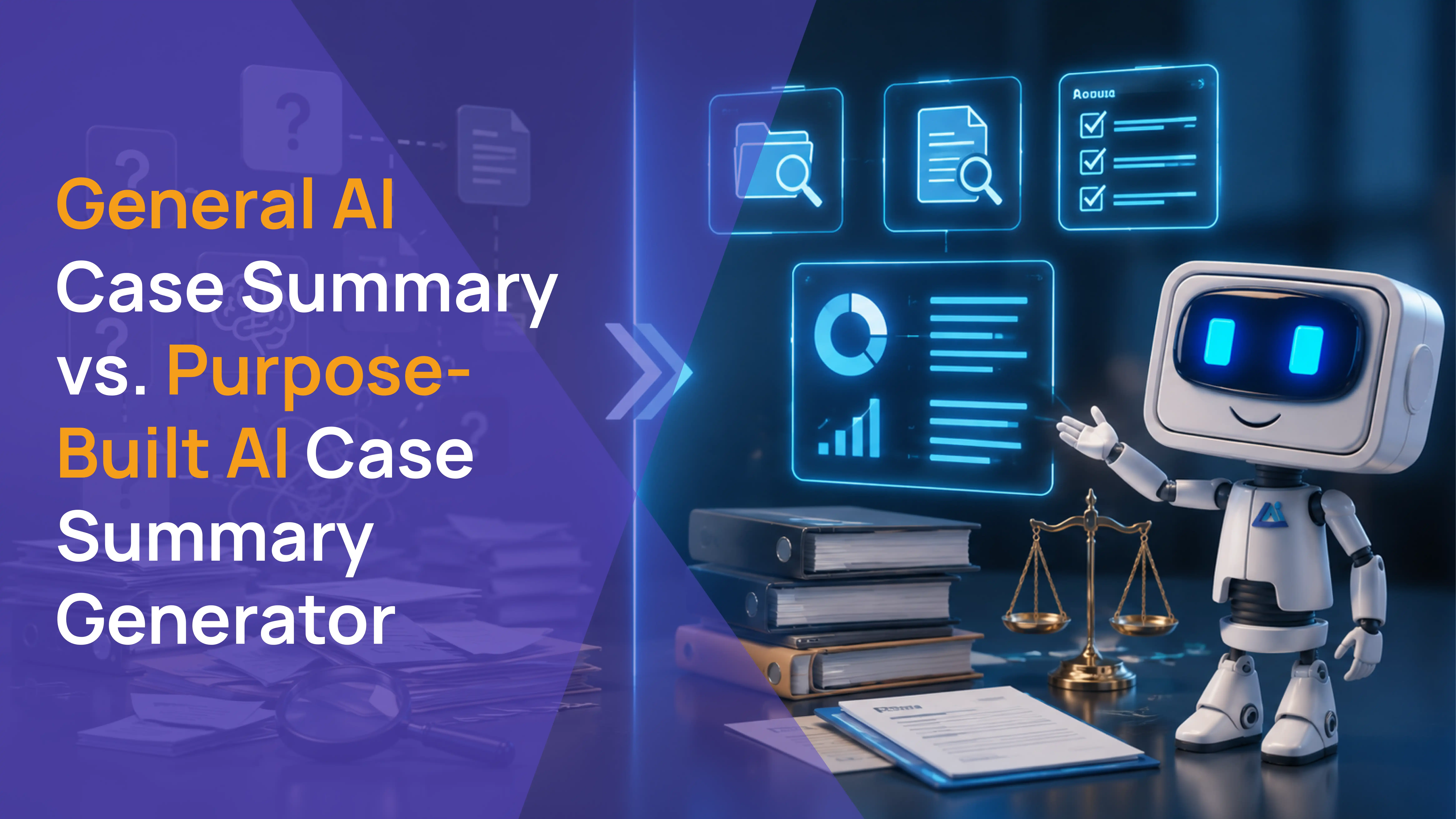
For a PI attorney at volume, the difference between a general tool and a purpose-built AI case summary generator is not a feature comparison. It is a before-and-after for how the day actually runs.
Before Law Practice AI: A paralegal spends hours per case reading through records from four providers, extracting clinical findings, and organizing them into a usable format. The attorney reviews a manually assembled summary before touching the demand. If documentation is missing, it is discovered during drafting or after the demand is sent.
After Law Practice AI: The attorney opens a structured case summary organized by provider and treatment date, with clinical language extracted from physician notes and damage indicators assembled from verified billing records. Documentation gaps are flagged before the attorney reviews anything. The demand letter workflow begins from a complete, verified starting point.
The time recovered is not marginal. For a firm producing summaries across a high-volume caseload, it compounds across every case, every week.
How Law Practice AI Case Summary Generator Works for PI Firms
Law Practice AI is a case summary platform designed specifically for plaintiff law firms.
The platform reads every uploaded document in the case file. Medical records, imaging reports, billing statements, and provider correspondence are all processed automatically. The output is a structured case summary organized by provider and treatment date, with clinical language extracted directly from physician notes and damage indicators assembled from verified billing records.
Before the attorney reviews the summary, the platform flags any documentation gaps, missing records, or timeline inconsistencies. Every summary requires attorney review. No output leaves the platform without explicit attorney sign-off.
For PI firms handling high-volume caseloads, this is what an automated case summary looks like in practice.
Pricing starts at $97 per demand on a pay-per-use model with no long-term contracts.
The AI Case Summary Generator Built for How PI Firms Actually Work
General AI tools were built to summarize text. A PI caseload does not run on text blocks.
It runs on medical records from multiple providers, treatment timelines that span months, ICD codes that need to match the demand letter, and damage figures that need to come from verified billing records.
Law Practice AI handles all of it. The AI case summary generator reads your actual case documents, organizes the findings, flags the gaps, and feeds the structured output directly into your demand letter workflow.
When the summary is done, Demand AI takes over. Clinical language flows from the summary into the demand letter automatically. No manual transfer. No starting from scratch.
Book a Consultation to see both features in action and find out how they fit your PI practice.