Practice AI™ vs. EvenUp™: Which Legal AI Tool Best Serves Your Firm's Needs?
To provide a clear, unbiased comparison between Practice AI™ and EvenUp™, highlighting their features, benefits, and limitations. This will assist legal professionals in making informed decisions about which AI tool aligns best with their firm's requirements.
In today's fast-paced legal environment, efficiency and accuracy are paramount. Legal professionals are increasingly turning to AI-powered legal tools to streamline tasks like drafting personal injury demand letters, summarizing medical records, and managing case workflows.
Two prominent players in this space are Practice AI™ and EvenUp™. While both offer solutions aimed at enhancing legal operations, they differ in features, performance, and user experience. This article delves into a side-by-side comparison to help you determine which tool aligns best with your firm's needs, especially if you're searching for the best AI for lawyers or evaluating AI legal assistant platforms.
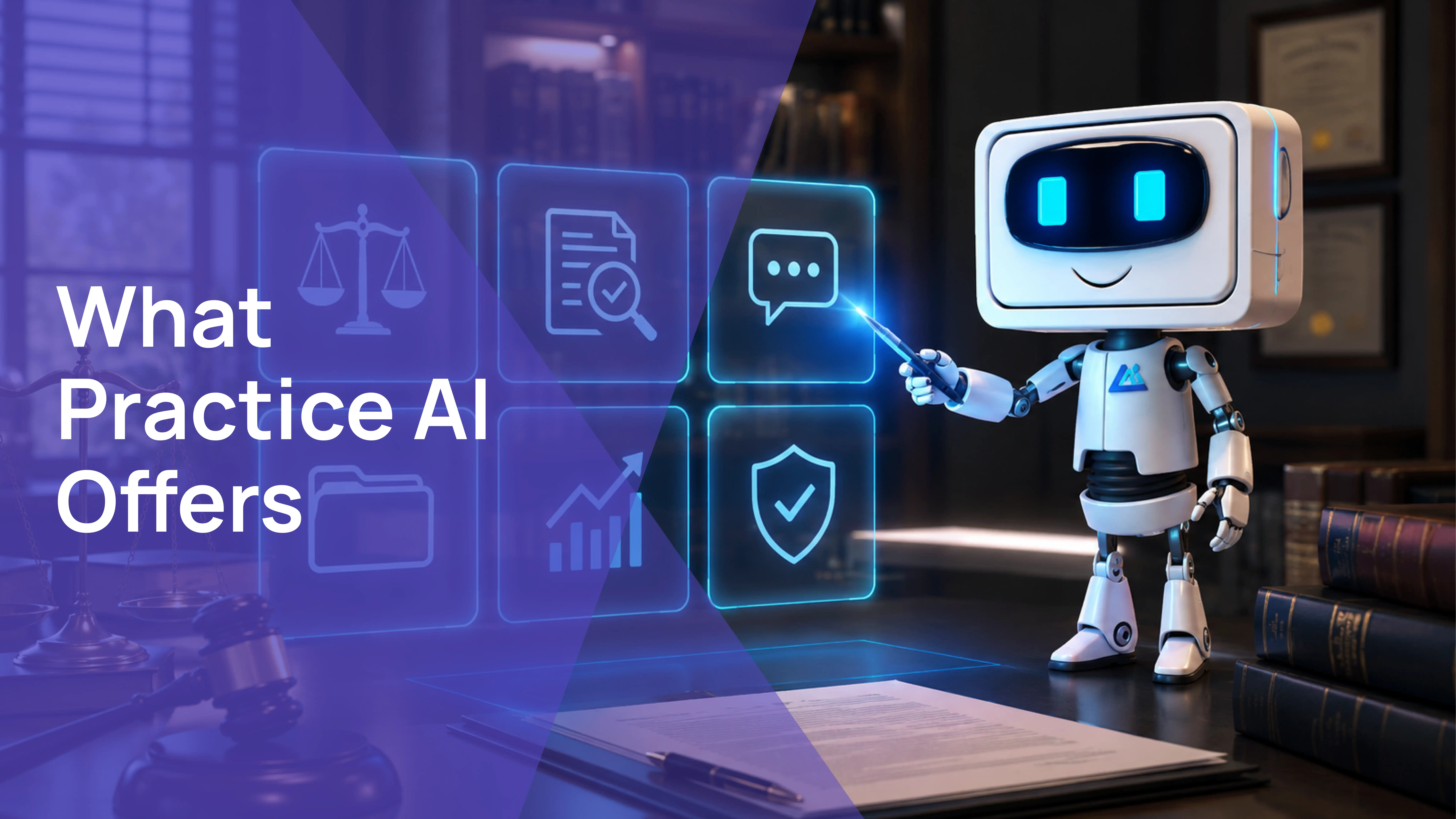
What Practice AI™ Offers
Practice AI™ is designed to automate and simplify the drafting process for legal professionals. Key features include:
AI-Generated Demand Letters: Quickly create precise and persuasive AI-powered demand letters tailored to various case types, including personal injury and lemon law. This is ideal for attorneys looking for an AI legal document generator that saves time and boosts accuracy.
Medical Records Summaries and Chronologies: Automatically generate comprehensive summaries and timelines from medical records, aiding in case preparation and strategy. This capability is especially beneficial for firms handling AI for healthcare legal cases or needing AI document summarization for large files.
HIPAA-Compliant Storage via Microsoft Azure: Ensures that all data is stored securely, maintaining compliance with healthcare privacy regulations. This meets the growing need for AI HIPAA compliance and addresses concerns around data security in AI.
Customizable Templates and User Access Controls: Offers flexibility in document formatting and robust access management to maintain data integrity and security, ideal for firms seeking legal document automation tools or investing in AI for legal professionals.
What EvenUp™ Offers
EvenUp™ provides AI-driven solutions aimed at personal injury law firms. Its offerings include:
AI-Generated Demand Letters with Human Review: Combines AI demand letter drafting with in-house legal expert reviews to produce demand letters.
Medical Chronologies and Case Preparation Tools: Assists in organizing and summarizing medical information pertinent to cases, helping attorneys manage workflows that intersect with AI in medical tech or AI for medical records.
Integration of Proprietary AI Models and In-House Legal Expertise: Utilizes a combination of AI technology and legal professionals to enhance document quality.
Key Differences at a Glance
Feature
Practice AI™
EvenUp™
AI-Generated Demand Letters
✅ Yes
✅ Yes, with human review
Medical Records Summaries
✅ Yes
✅ Yes
HIPAA-Compliant Storage
✅ Yes (Microsoft Azure)
🟧 Partial (SOC 2, not HIPAA-certified)
Customizable Templates
✅ Yes
❌ No
User Access Controls
✅ Yes
❌ No
Delivery Time
✅ Fast and predictable
❌ Slow and unpredictable
Legal Citations in Documents
✅ Comprehensive
❌ Limited
Revision Flexibility
✅ Unlimited
❌ Limited
Billing and Sign-Up Process
✅ Transparent and straightforward
❌ Confusing and costly
Document Output Formats
✅ Multiple formats
❌ Word files only
Which Tool is Best for Your Firm?
Practice AI™ is ideal for firms seeking:
Efficiency: Rapid generation of demand letters and medical summaries in minutes.This is especially useful for law offices handling bulk documentation, including AI-generated legal documents for high-volume caseloads.
Customization: Flexibility in document templates and formatting makes Practice AI™ an ideal solution for those exploring AI for attorneys
Security: Robust data protection with HIPAA-compliant storage and user access controls, important for firms handling sensitive client records and those interested in AI in data security or AI for medical professionals.
EvenUp™ may suit firms that:
Prefer Human Oversight: Value the combination of AI drafting with human legal review, especially in complex personal injury or lemon law cases where nuance is critical.
Focus on Personal Injury Cases: Specialize in personal injury law and can accommodate the platform's limitations.
Why Practice AI™ Is the Best AI Legal Assistant for Law Firms
Selecting the right AI tool is crucial for enhancing your firm's productivity and client service. Practice AI™ offers a comprehensive, secure, and customizable solution that addresses common pain points in legal document preparation. Its emphasis on speed, accuracy, and user control makes it a compelling choice for modern legal practices evaluating AI in the legal field or looking to invest in AI for law firms.
The platform is led by industry veteran Hamid Kohan, whose vision for legal AI innovation continues to shape how law firms adopt intelligent automation tools.He has proven that in this lifetime, AI is indeed a useful tool to support human efforts and he showed it through the platform, Practice AI.
Explore Practice AI™ today to experience how it can transform your legal operations, whether you’re looking to automate legal documents, improve AI-powered legal writing, or drive faster resolutions with AI for faster settlements. Schedule a demo or start your free trial to see the benefits firsthand.
Demand letters play a crucial role in personal injury and lemon law cases across California, especially in busy legal hubs like Los Angeles. They set the stage for settlement negotiations, provide a legal basis for claims, and demonstrate an attorney’s commitment to advocating for their client. However, when these letters are delayed, California law firms face serious consequences, including missed opportunities, frustrated clients, and potential financial losses.
Attorneys in Los Angeles and throughout California are already managing heavy caseloads, and drafting demand letters manually can slow down the legal process. This is where automation becomes essential. AI Demands™, an AI-powered tool by Practice AI™, ensures demand letters are generated quickly, accurately, and in compliance with California legal standards, helping law firms stay on track and avoid unnecessary delays.
The Cost of Delayed Demand Letters in California
When California law firms fail to complete demand letters on time, they risk:
1. Missed Deadlines and Case Delays
Personal injury and lemon law cases in California often involve strict deadlines. Delayed demand letters can push back settlement discussions, leading to longer case timelines and dissatisfied clients. In worst-case scenarios, missing legal deadlines can result in forfeited claims, especially under California’s statute of limitations.
2. Reduced Negotiation Power
A well-crafted demand letter establishes the strength of a case early on. If it’s delayed, the opposing party may take advantage of the delay, prolong negotiations, or push for a lower settlement. Quick, well-documented demands demonstrate confidence and urgency, especially important in competitive legal markets like Los Angeles.
3. Client Dissatisfaction and Loss of Trust
Clients expect efficiency from their attorneys. A delayed demand letter can make a client feel neglected or question the competence of the law firm. For Los Angeles firms competing for referrals and positive online reviews, one bad experience can significantly impact reputation.
4. Increased Workload for Attorneys and Staff
When demand letters pile up, California law firms experience workflow bottlenecks. Attorneys and paralegals are forced to rush through drafting, increasing the likelihood of errors. This extra workload leads to burnout and reduced overall efficiency.
5. Potential Revenue Loss
California law firms depend on settlements to generate revenue. The longer it takes to submit demand letters, the longer it takes to receive settlements, impacting cash flow and firm profitability.
How AI Demands™ Solves These Challenges for California Law Firms
AI-powered legal tools like AI Demands™ eliminate drafting delays and ensure demand letters are submitted on time. Here’s how:
1. Automated Drafting for Faster Turnaround
Instead of spending hours manually drafting demand letters, AI Demands™ generates high-quality letters in minutes, allowing Los Angeles attorneys to submit claims faster and keep cases moving.
2. Compliance with California Legal Deadlines
AI Demands™ ensures letters align with jurisdictional requirements across California, reducing the risk of missed filings or technical errors.
3. Improved Accuracy and Legal Consistency
By using AI-driven legal intelligence, demand letters are free from common drafting errors. The tool incorporates case facts, legal references, and persuasive language automatically, aligned with California laws and regulations.
4. Scalable Solution for High-Volume Law Firms
Law firms in cities like Los Angeles that handle multiple cases simultaneously can easily scale their practice by automating demand letter creation. AI Demands™ allows attorneys to focus on legal strategy rather than time-consuming drafting.
5. Enhanced Client Satisfaction
With quicker demand letter turnaround times, clients in California receive faster case resolutions. Happy clients lead to more referrals, positive reviews, and a stronger reputation for the firm.
How AI Demands™ Solves These Challenges
AI-powered legal tools like AI Demands™ eliminate drafting delays and ensure demand letters are submitted on time. Here’s how:
1. Automated Drafting for Faster Turnaround
Instead of spending hours manually drafting demand letters, AI Demands™ generates high-quality letters in minutes—allowing attorneys to submit claims faster and keep cases moving.
2. Compliance with Legal Deadlines
AI Demands™ ensures letters align with jurisdictional requirements and legal deadlines, reducing the risk of missed filings or technical errors.
3. Improved Accuracy and Legal Consistency
By using AI-driven legal intelligence, demand letters are free from common drafting errors. The tool incorporates case facts, legal references, and persuasive language automatically.
4. Scalable Solution for High-Volume Firms
Law firms handling multiple cases simultaneously can easily scale their practice by automating demand letter creation. AI Demands™ allows attorneys to focus on legal strategy rather than time-consuming drafting.
5. Enhanced Client Satisfaction
With quicker demand letter turnaround times, clients receive faster case resolutions. Happy clients lead to more referrals, positive reviews, and a stronger reputation for the firm.
AI Demands™ vs. Manual Drafting: A Performance Breakdown
Challenge
AI Demands™ Solution
Manual Drafting Issue
Speed
Generates letters in minutes
Takes hours or days
Accuracy
Uses built-in legal intelligence
Prone to human error
Deadline Compliance
Keeps cases on schedule
Risk of delays
Cost Efficiency
Reduces labor costs
Requires more staff time
Client Satisfaction
Faster results, happier clients
Frustrated clients due to delays
Don’t Let Delays Cost Your California Firm, Automate with AI Demands™
Law firms in Los Angeles and throughout California can’t afford to let demand letter delays impact their case outcomes, client satisfaction, or revenue. AI Demands™ ensures that demand letters are drafted quickly, accurately, and in compliance with California legal standards, helping firms avoid unnecessary setbacks.
✅ Increase efficiency ✅ Meet California legal deadlines ✅ Reduce workload and burnout ✅Maximize client satisfaction
Sign up with Practice AI™ today and discover how AI Demands™ can transform your demand letter process in California.
Demand letters have always been one of the most time-consuming documents a personal injury attorney produces. Reviewing medical records, calculating damages, drafting clinical language, and assembling exhibits can consume three to five hours per letter on a complex case. Multiply that across a full caseload and you are looking at days of attorney time spent on documentation every single week.
AI demand letters are changing that equation. Personal injury firms across the United States are now using AI legal drafting tools to produce structured, evidence-backed demand letters in a fraction of the time, without sacrificing the precision that drives settlement outcomes.
This article explains what an AI demand letter is, how the technology works, and why PI attorneys are adopting it faster than almost any other legal AI tool available today.
Key Takeaways
An AI demand letter is a demand document generated or drafted with the assistance of AI legal writing tools, using structured case data as inputs rather than starting from a blank page.
Personal injury attorneys using AI demand letter tools spend less time on documentation and more time on case strategy, client communication, and closing settlements.
AI demand letters are not auto-sent documents. Every draft requires attorney review and approval before it leaves the office.
The best AI demand letter tools are purpose-built for personal injury workflows, not general-purpose writing assistants.
What Is an AI Demand Letter?
An AI demand letter is a formal pre-litigation document that is drafted, structured, or enhanced using artificial intelligence. Instead of building the letter manually from scratch, the attorney inputs key case data including medical records, treatment timelines, wage loss figures, and liability documentation. The AI then generates a structured first draft that follows a legally sound demand letter format.
The output is not a finished product. It is a well-organized, clinically precise first draft that the attorney reviews, edits, and approves before sending. Think of it as the difference between starting with a blank page and starting with a 90% complete document that already has your case facts organized correctly.
AI demand letter tools designed for personal injury practice go further than general legal AI tools. They are trained on PI-specific document structures, understand medical terminology, can cross-reference treatment records against damage calculations, and produce language that insurance adjusters recognize as credible and thorough.
Glossary of Key Terms
Added to support less experienced readers navigating AI legal technology for the first time.
AI Demand Letter
A pre-litigation settlement document drafted with the assistance of artificial intelligence, using structured case data as inputs to generate a first draft for attorney review.
Medical Chronology
A date-ordered summary of a client's medical treatment, diagnoses, and prognosis, built from uploaded medical records and used to support damages claims in a demand letter.
Damage Calculation
The process of quantifying all economic and non-economic losses a client has suffered, including medical expenses, lost wages, pain and suffering, and future costs.
Liability Narrative
The section of a demand letter that establishes who was at fault, supported by police reports, witness statements, photographs, and other evidence.
Bates-Numbered Exhibit Packet
A set of supporting documents numbered sequentially for easy reference during negotiations or litigation. Standard in professional demand letter packages.
Maximum Medical Improvement (MMI)
The point at which a treating physician determines that a patient's condition has stabilized. Demand letters are typically sent after MMI is reached to capture the full scope of damages.
Case Management System (CMS)
Software used by law firms to organize case files, track deadlines, and manage client communications. Examples include CASEpeer, Filevine, and SmartAdvocate.
Pre-Litigation
The phase of a personal injury case before a lawsuit is formally filed. Demand letters are pre-litigation documents sent to insurance carriers to initiate settlement negotiations.
How AI Demand Letter Generation Actually Works
Understanding what happens inside an AI demand letter tool helps attorneys evaluate whether a platform is worth adopting. Here is how the process works in a purpose-built personal injury system.
Step 1: Case Data Is Inputted or Imported
The attorney or paralegal inputs the core case details: client information, incident date, liability narrative, medical provider list, treatment summary, wage loss documentation, and any supporting evidence. In platforms that integrate with case management software like CASEpeer, Filevine, or SmartAdvocate, this data is pulled automatically from the existing case file.
Step 2: The AI Organizes and Structures the Document
The AI processes the input data and organizes it into the standard demand letter structure: liability narrative, medical chronology, pain and suffering documentation, economic damages, and settlement demand. It applies clinical language from the medical records, flags any gaps in documentation, and produces a draft that mirrors how an experienced PI attorney would build the letter.
Step 3: The Attorney Reviews and Edits
Every AI-generated demand letter goes through attorney review before it is sent. The attorney checks liability language, verifies damage figures, adjusts tone where needed, and approves the final version. The AI handles the assembly and first draft. The attorney handles the judgment and sign-off.
Step 4: The Letter Is Finalized and Sent
Once approved, the letter is finalized with supporting exhibits attached and sent to the insurance company. The entire process, from data input to finalized letter, takes an average of 20 minutes compared to the 3 to 5 hours required for manual drafting.
AI Demand Letters vs. Traditional Demand Letters: What Actually Changes
Element
Traditional Demand Letter
AI Demand Letter
Drafting time
3 to 5 hours per letter
15 to 20 minutes per letter
Starting point
Blank page or generic template
Structured first draft from case data
Medical language
Manually drafted from record review
Pulled directly from medical documentation
Damage calculation
Manual calculation and verification
Auto-calculated from inputted figures
Documentation gaps
Discovered during drafting or missed
Flagged by AI before the letter is sent
Consistency across cases
Varies by attorney and paralegal
Standardized structure across all cases
Attorney review required
Yes
Yes, always
The biggest practical difference is not just speed. It is consistency. When every demand letter your firm produces follows the same evidence-backed structure, adjusters learn that your firm is prepared, and they respond accordingly.
Why Personal Injury Attorneys Are Adopting AI Demand Letters Now
The timing of AI demand letter adoption in personal injury law is not coincidental. Three converging factors are driving it in 2026.
According to the 2026 Legal Industry Report by 8am, 69% of legal professionals now use generative AI tools at work, a figure that more than doubled in a single year. Personal injury practices, with their high document volume and repeatable workflows, are among the fastest adopters.
A Legartis Blog identified the use of generative AI in corporate legal departments more than doubled across 30 countries.
For personal injury firms, switching to AI demand letter generation delivers measurable advantages across the entire practice:
Recover attorney hours previously spent on manual document assembly
Redirect attorney capacity toward case strategy, client development, and settlement negotiation
Handle more active cases per attorney without adding headcount or increasing overhead
Produce consistent, evidence-backed demand letters across every case regardless of who drafts them
Reduce the risk of documentation gaps that give adjusters room to undervalue claims
Move cases from intake to settlement faster with a streamlined drafting workflow
Real-World Results: What Firms Are Seeing
Law Practice AI client firms report the following outcomes following platform implementation:
Personal Injury Firm, California "The production of demand letters increased dramatically, and it produces a great professional product." David Rowland, Attorney, Lemon My Vehicle
Personal Injury Firm, Southeast US "We've been using Practice AI to help write our demands. It's made the demand writing process extremely efficient, allowing us to handle more demands." Jordan Ariel, Esq., Ariel Law Group
These outcomes reflect the operational shift that purpose-built AI demand letter tools produce when integrated directly into a firm's existing workflow, not used as a standalone writing assistant.
What to Look for in an AI Demand Letter Tool
Not every AI legal writing tool is built for personal injury demand letters. General-purpose AI writing assistants can produce generic documents, but they lack the case-specific depth that makes a demand letter credible to an insurance adjuster. Here is what separates a purpose-built PI demand letter tool from a generic one.
Personal Injury Specific Training
The AI should understand PI-specific document structures, medical terminology, damage calculation frameworks, and the evidentiary standards that adjusters use to evaluate claims. A tool trained on general legal documents will not produce the clinical precision that personal injury demand letters require.
Integration with Your Case Management System
The most efficient AI demand letter tools pull data directly from your existing case management platform. Manual data re-entry defeats a significant portion of the time savings. Look for platforms that integrate with the software your firm already uses.
Built-In Documentation Gap Detection
A strong AI demand letter tool does not just draft. It audits. It flags missing medical records, incomplete wage loss documentation, and unsupported liability claims before the letter goes out, giving the attorney the opportunity to strengthen the package before it reaches the adjuster.
Attorney Review at Every Stage
Any platform that positions itself as fully automated should be approached with caution. The attorney must review and approve every demand letter before it is sent. The AI role is to accelerate the drafting process, not to replace attorney judgment.
How Law Practice AI Approaches AI Demand Letters
Law Practice AI is built specifically for plaintiff personal injury firms that need purpose-built AI demand letter generation, not a generic writing assistant adapted for legal use.
The platform integrates directly with CASEpeer, Filevine, and SmartAdvocate to pull structured case data automatically. It generates demand letter drafts that include organized medical chronologies, clinical language sourced from actual medical records, verified damage calculations, and liability narratives built from case documentation. Every draft is reviewed and approved by the attorney before it leaves the firm.
Firms using Law Practice AI report handling 40% more active cases per attorney compared to firms using manual drafting workflows, with demand letter preparation time dropping from an average of 3 hours to under 20 minutes per letter.
Key platform differentiators:
Direct integration with CASEpeer, Filevine, and SmartAdvocate
Medical chronology built automatically from uploaded records
Documentation gap detection before the letter goes out
Attorney review and approval required on every draft
$97 per demand, no subscription required
Frequently Asked Questions: AI Demand Letters for Personal Injury Law
Q1: What is an AI demand letter in personal injury law?
Q2: Are AI demand letters legally valid?
Q3: How much time does AI demand letter drafting actually save?
Q4: Can AI demand letters replace attorney judgment?
Q5: What makes a personal injury AI demand letter tool different from a general AI writing tool?
Ready to See What AI Demand Letters Can Do for Your Firm?
The shift to AI demand letter generation is not coming. It is already here. Personal injury firms that have integrated AI legal drafting into their workflows are handling more cases, producing stronger demand packages, and recovering more for their clients without adding headcount.
If your firm is still building demand letters manually, you are spending attorney hours on document assembly that AI can handle in minutes. That time has a direct cost in capacity, revenue, and competitive positioning.
Law Practice AI gives personal injury firms a purpose-built platform to generate, review, and send stronger demand letters faster. See how it works for your practice at Law Practice AI.
As artificial intelligence (AI) tools flood the market, legal and medical professionals face a dilemma: How to choose the right solution for their needs. With options ranging from client intake systems to document analyzers and case management software, it’s tempting to start using multiple tools to cover all stages. However, this approach often creates more problems than it solves.
But what are these problems and why a single, integrated platform such as Practice AI can be a better solution?
The Pitfalls of Using Multiple AI Tools
1. Increased Complexity and Confusion
When professionals use multiple tools for different tasks, the result is often a messy and overcomplicated workflow. Each tool has its own interface, login credentials, and learning curve, which can quickly overwhelm even the most tech-savvy users.
This complexity doesn’t just slow you down—it can lead to errors, such as missed deadlines or incomplete documentation, which are costly in both legal and medical fields.
2. Higher Costs
Purchasing several specialized AI tools adds up to your monthly costs. Many tools require monthly subscriptions, additional training sessions, or hardware upgrades to run smoothly. These fragmented expenses can inflate your budget without delivering any value in return.
By comparison, an all-in-one platform consolidates these costs, offering a streamlined solution that’s easier on your bottom line.
3. Lack of Integrations
AI tools often operate in silos, making it difficult to transfer data seamlessly between systems. For example, client data collected by one tool may not integrate with another used for case management. This forces professionals to manually bridge the gap, wasting time and increasing the risk of errors.
4. Reduced Productivity
Switching between tools disrupts workflows and decreases efficiency. Studies show that constant task-switching can reduce productivity by as much as 40%. For busy attorneys or healthcare providers, this lost time can mean fewer clients served or delayed patient care.
Why One Platform Works Better
The decision to consolidate your operations onto a single platform can transform how your business or practice functions. Here are the key reasons why an all-in-one solution is often more effective than using multiple disconnected tools:
1. Simplified Workflows
Managing multiple tools often results in fragmented workflows, forcing users to switch between platforms to complete a single task. A unified platform eliminates this inefficiency by offering a cohesive system where everything—whether it’s client intake, demand generation, or case management—is accessible in one place. This streamlining reduces time spent navigating between tools and allows for smoother, more productive operations.
2. Cost-Effective Solutions
Subscribing to several specialized tools can quickly inflate operational costs, especially when each tool comes with its own subscription fees, licensing requirements, and training needs. By contrast, an all-in-one platform consolidates these functions under one subscription, offering better value for your investment. It simplifies budgeting while ensuring that your resources are focused on a single, comprehensive solution.
3. Seamless Data Integration & Compliance
Disconnected tools often operate in silos, making it difficult to transfer or synchronize data. An integrated platform ensures that all components work together effortlessly, enabling seamless data sharing. This reduces the risk of duplication, errors, or lost information while maintaining continuity throughout your workflow.
Furthermore, all-in-platforms are usually designed with data security and compliance in mind, such as advanced encryption, real-time threat detection, and compliance with industry standards, creating peace of mind for lawyers, medical providers, and their clients.
4. Better User Experience
Learning multiple systems and managing various sets of credentials can overwhelm users, leading to frustration and inefficiency. A single platform simplifies the experience by providing:
One interface to master, reducing the learning curve.
Unified credentials for easier access.
A single point of contact for support, which minimizes delays when issues arise.
This simplicity results in less stress and more time for high-priority tasks, allowing users to focus on their clients, patients, or business growth rather than technology management.
5. Scalability and Adaptability
As your needs grow, managing multiple tools often requires piecemeal updates or adopting even more software. In contrast, an all-in-one platform is typically designed to scale alongside your business, offering additional features or integrations as needed. This adaptability ensures that the system continues to meet your needs without disrupting your workflows.
Practice AI: The One Platform You Need
At Practice AI, we understand the challenges legal and medical professionals face when juggling multiple tools. That’s why we’ve designed our platform to address every step of your workflow:
AI Demand automates demand letter drafting, saving hours of work while ensuring compliance.
AI Doc Summary analyzes and summarizes complex documents, spotlighting key details in minutes.
By combining these tools into a single platform, Practice AI empowers professionals to work smarter—not harder.
Try Practice AI Today
Using multiple AI tools might seem like a smart move, but the hidden costs can quickly outweigh the benefits. From increased complexity to higher expenses and reduced productivity, the downsides are clear.
With an all-in-one platform like Practice AI, you can simplify your workflows, reduce costs, and focus on what matters most—delivering exceptional service to your clients and patients.
Sign up with Practice AI now and explore our all-in-one AI solution.