AI Verdict Analysis in Demand Letters for Stronger Legal Strategy
Discover how Practice AI™ integrates AI verdict analysis and case valuation into demand letters, helping law firms save time, negotiate smarter, and prepare cases with confidence.
The legal world has always balanced tradition with change. From the way cases are researched to how arguments are presented in court, every innovation reshapes the practice of law just a little more. And today, one of the biggest shifts is happening with the rise of artificial intelligence, not as a distant concept, but as a tool lawyers are already testing, questioning, and adopting in different ways, especially in areas like case valuation and verdict analysis. How big could this be?
In this blog, we’ll explore how Practice AI™ is driving that shift by integrating verdict analysis and case valuation directly into the AI Demands platform, helping firms work faster, negotiate smarter, and prepare cases with greater confidence.
AI’s Growing Role in the Legal Landscape
As highlighted ina recent article about AI and legal space, scholars are examining how generative AI is influencing judicial decision-making, with a strong call for careful research and collaboration across disciplines.
It’s a reminder that AI is no longer just a small talk but it is now a growing presence in courtrooms, law firms, and client interactions. And with the latest expansion of our AI Demands product, we’re introducing case valuation intelligence and verdict analysis tool directly into demand letters, equipping firms with real-time data on potential settlement ranges, past verdicts with case citations, and actionable insights that give attorneys an edge in negotiations, trial preparation, and deciding whether to litigate or settle.
Why Law Firms Need Verdict Analysis Tools in 2025
Verdict outcomes shape the entire strategy of a case. Attorneys often spend hours, even days, researching past trial results to understand potential risks and opportunities. Knowing how juries or judges have ruled in similar cases is critical when deciding whether to negotiate, settle, or pursue litigation. Yet this process is traditionally slow, fragmented, and dependent on piecing together precedent from multiple sources.
This is where AI is proving to be a game-changer. By bringing verdict analysis into the same space where demand letters are created, attorneys no longer need to switch between databases or rely on limited anecdotal knowledge. Instead, they gain immediate access to relevant case citations, outcomes, and settlement ranges, all while drafting. This integration doesn’t just save time; it fundamentally shifts how legal professionals prepare and strategize.
What’s Next for AI Demands at Practice AI™
The release of our case valuation and verdict analysis tools is just the beginning. At Practice AI™, our vision is to transform demand letter drafting into a fully strategic process, one that doesn’t just save time, but actively improves case outcomes.
Here’s a look at what’s ahead:
Deeper Data Intelligence – Expanding the accuracy and scope of our case valuation models, factoring in more variables such as jurisdiction, injury type, and evolving case law.
Expanded Verdict Databases – Building a richer library of past outcomes and citations so attorneys can draw from the widest possible set of precedents.
Smarter Drafting Integration – Embedding insights even more seamlessly into the demand creation flow, so research and strategy happen in real time while drafting.
Enhanced Trial Preparation Tools – Developing features that help firms move from pre-litigation to litigation phases with confidence, armed with AI-powered benchmarks and insights.
Continued Time & Cost Savings – Strengthening efficiency so firms can consistently reduce drafting time by up to 90% and cut costs by as much as 95%, without sacrificing strategic depth.
Built for Lawyers Who Want the Edge
Looking ahead, our goal is simple: to empower firms to negotiate smarter, prepare more effectively for trials, and deliver stronger results for clients, all while making the process more efficient.
AI Demands is more than a drafting tool. It’s a strategic partner designed to give attorneys the insights they need, when they need them. With real-time case valuation and integratedverdict analysis, Practice AI™ is setting a new standard for how law firms approach demand letters, negotiations, and trial preparation.
If you’re ready to see how AI can streamline your workflow and give your firm a competitive edge, explore the full capabilities of Practice AI’s AI Demands platform today!
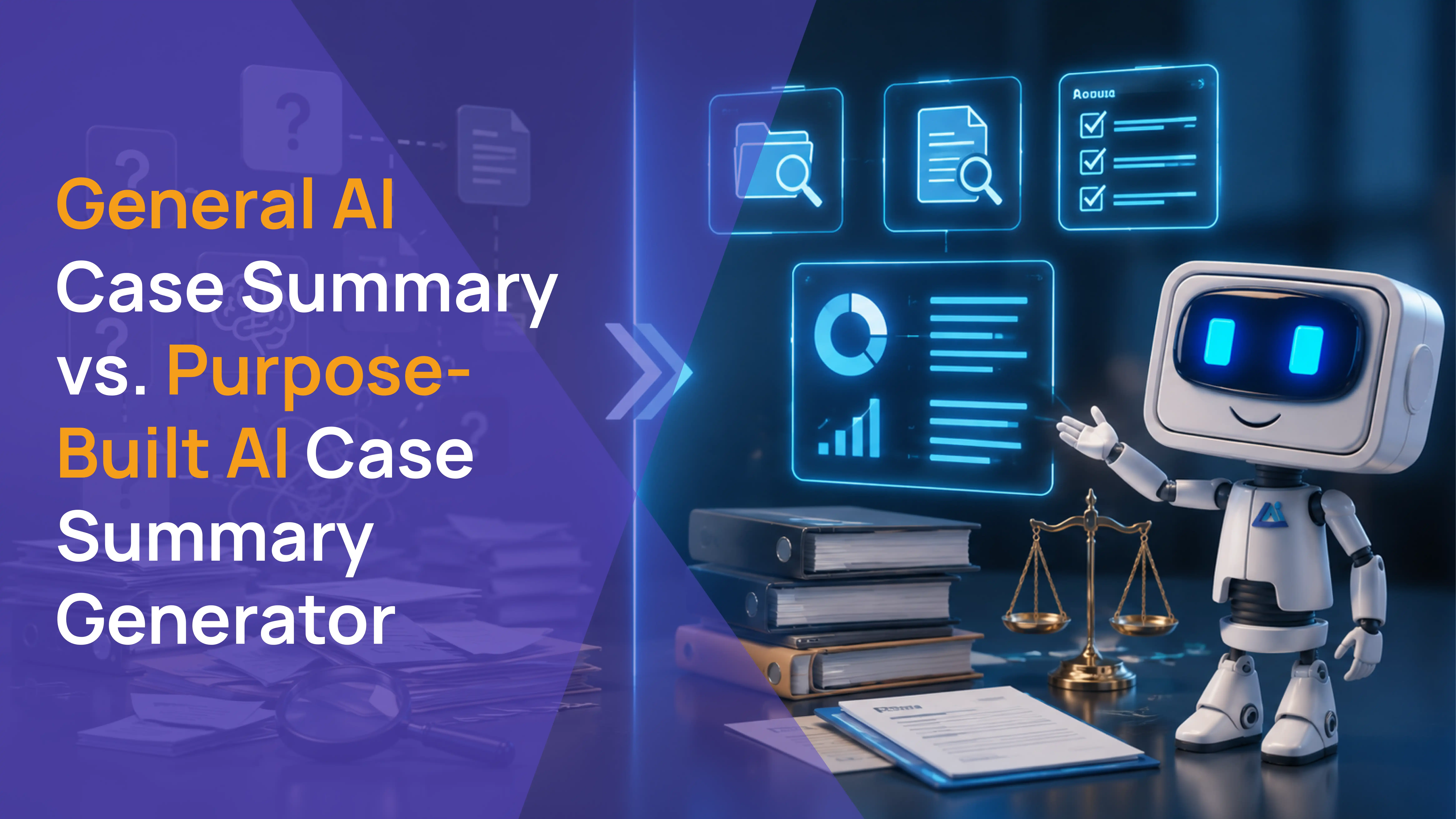
If your firm is ready to stop assembling case summaries manually and wants to see what AI case summary generators actually look like in a PI workflow, this article is for you.
Most AI case summary generators were built for general document compression. They accept a block of text, identify the most prominent information, and return a shorter version. That output has no place in a PI demand letter workflow where the attorney needs clinical language extracted from actual physician notes, ICD codes from source records, and a damage picture assembled from verified billing data.
Law Practice AI's AI case summary generator was built specifically for plaintiff practice. It reads the actual documents in your case file, organizes findings by provider and treatment date, flags documentation gaps before the attorney opens the file, and connects directly to the demand letter workflow.
This article explains exactly what separates it from the general tools and why that distinction directly affects how fast your firm moves cases forward.
KEY TAKEAWAYS
AI case summary generators built for PI firms read your actual uploaded case documents, not pasted text blocks.
Clinical language in an ai case summary should mirror what the treating physician documented, not paraphrase it.
The AI case summary generator your firm uses must be HIPAA compliant and SOC 2 certified before any medical records enter the platform.
For PI firms at volume, a case summarizer for lawyers that integrates with CASEpeer, Filevine, or SmartAdvocate recovers significantly more time than a standalone tool.
How a PI Firm Uses an AI Case Summary Generator in Practice
Here is what the workflow looks like for a PI attorney using a purpose-built ai case summary generator on an active caseload.
Step 1: Upload the case documents. Medical records, billing statements, imaging reports, and provider correspondence are uploaded directly to the case file. No manual data entry.
Step 2: The platform processes the documents. The ai case summary generator reads every uploaded file, extracts clinical findings, organizes the treatment chronology, and assembles the damage indicators from verified billing data.
Step 3: The attorney reviews a structured summary. The attorney opens a summary organized by provider, with clinical language from the physician notes, ICD codes for every documented injury, and a damages picture ready to use. The summary also includes any flags for missing documentation.
Step 4: The attorney moves directly to demand drafting. Because the summary is structured and complete, the attorney can begin demand letter preparation immediately rather than spending hours reviewing raw records.
Step 5: The attorney approves and the summary feeds into the demand letter workflow. The reviewed summary connects directly to the demand letter workflow. Clinical findings, damage figures, and ICD codes flow into the demand without manual transfer so the attorney drafts from the same verified data the summary was built from.
For PI firms producing case summaries across a high-volume caseload, the time recovered at this stage compounds quickly.
What General AI Case Summary Generators Get Wrong for PI Firms
General AI tools approach summarization the same way regardless of context. They read text, identify the most prominent information, and compress it into a shorter output.
That approach works for summarizing a meeting transcript or a research article. It does not work for a plaintiff PI case file.
The Problem With Text-Based Summarization for Medical Records
A PI case file is not a single document. It is a collection of records from multiple providers, each with its own structure, terminology, and clinical significance. An emergency department record looks different from a chiropractic treatment note, which looks different from an orthopedic surgical report.
A general ai case summary generator that accepts a pasted text block processes whatever text was entered not the source documents. Clinical nuance is lost. ICD codes are not extracted. Treatment timelines are not organized. The attorney receives a summary that describes the case in general terms rather than documenting it with the precision an adjuster will scrutinize.
Why Clinical Precision Matters in PI Case Summaries
The language in a case summary flows directly into the demand letter. When the demand letter reflects the exact clinical language the treating physician documented the specific diagnosis codes, the precise injury descriptions, the documented prognosis it is significantly harder for an adjuster to dispute.
When the demand letter paraphrases those findings using general language from a text summarizer, experienced adjusters notice. It gives them grounds to question the documentation and justify a lower offer.
A legal case summary generator built for PI practice extracts the physician's actual language. That is not a minor technical detail. It is the difference between a strong demand and a weak one.
What a Purpose-Built AI Case Summary Generator Does for PI Firms
An ai case summary generator designed specifically for plaintiff personal injury practice handles the workflows that consume the most paralegal and attorney time without requiring legal judgment to execute.
Reads Every Uploaded Document
The platform reads every uploaded medical record, imaging report, billing statement, and provider correspondence in the case file. No manual re-entry. No pasting text. The source documents are the input.
Organizes by Provider and Treatment Timeline
The output is structured by provider and treatment date, not compressed into a single paragraph. The attorney reviewing the summary can go directly to the orthopedic evaluation section, the emergency department records, or the physical therapy notes without reading through everything else.
Extracts Clinical Language From Physician Notes
An automated case summary built for PI practice uses the language the treating physician actually documented. ICD codes are extracted from the source records. Diagnosis descriptions, treatment plans, and prognosis language are sourced from the physician's notes, not paraphrased from a text block.
Surfaces Damage Indicators
Before the attorney reviews the summary, the platform assembles the damage picture from the verified case data: total billed amounts organized by provider, future medical projections based on treating physician recommendations, and wage loss documentation from employer records.
Flags What Is Missing
The platform identifies documentation gaps before the attorney opens the file. Missing provider records, gaps in the treatment timeline, and unverified figures are flagged so the attorney knows exactly what needs to be addressed before the demand letter is drafted.
Before Law Practice AI vs. After Law Practice AI
For a PI attorney at volume, the difference between a general tool and a purpose-built AI case summary generator is not a feature comparison. It is a before-and-after for how the day actually runs.
Before Law Practice AI: A paralegal spends hours per case reading through records from four providers, extracting clinical findings, and organizing them into a usable format. The attorney reviews a manually assembled summary before touching the demand. If documentation is missing, it is discovered during drafting or after the demand is sent.
After Law Practice AI: The attorney opens a structured case summary organized by provider and treatment date, with clinical language extracted from physician notes and damage indicators assembled from verified billing records. Documentation gaps are flagged before the attorney reviews anything. The demand letter workflow begins from a complete, verified starting point.
The time recovered is not marginal. For a firm producing summaries across a high-volume caseload, it compounds across every case, every week.
How Law Practice AI Case Summary Generator Works for PI Firms
Law Practice AI is a case summary platform designed specifically for plaintiff law firms.
The platform reads every uploaded document in the case file. Medical records, imaging reports, billing statements, and provider correspondence are all processed automatically. The output is a structured case summary organized by provider and treatment date, with clinical language extracted directly from physician notes and damage indicators assembled from verified billing records.
Before the attorney reviews the summary, the platform flags any documentation gaps, missing records, or timeline inconsistencies. Every summary requires attorney review. No output leaves the platform without explicit attorney sign-off.
For PI firms handling high-volume caseloads, this is what an automated case summary looks like in practice.
Pricing starts at $97 per demand on a pay-per-use model with no long-term contracts.
Frequently Asked Questions: AI Case Summary Generator for Personal Injury Firms
Q1: Why do PI firms choose Law Practice AI case summary over general AI tools?
Q2: How quickly can a PI firm get started with Law Practice AI case summary?
Q3: How does Law Practice AI case summary integrate with CASEpeer and Filevine in practice?
Q4: What is an AI case summary generator for personal injury firms?
Q5: How is a legal case summary generator different from a general AI summarizer?
Q6: Does a PI firm need HIPAA compliance in a case summarizer for lawyers?
Q7: How much time does a purpose-built AI case summary generator save for a PI firm?
Q8: Does Law Practice AI offer a free trial?
The AI Case Summary Generator Built for How PI Firms Actually Work
General AI tools were built to summarize text. A PI caseload does not run on text blocks.
It runs on medical records from multiple providers, treatment timelines that span months, ICD codes that need to match the demand letter, and damage figures that need to come from verified billing records.
Law Practice AI handles all of it. The AI case summary generator reads your actual case documents, organizes the findings, flags the gaps, and feeds the structured output directly into your demand letter workflow.
When the summary is done, Demand AI takes over. Clinical language flows from the summary into the demand letter automatically. No manual transfer. No starting from scratch.
Book a Consultation to see both features in action and find out how they fit your PI practice.
AI is transforming how legal and medical professionals work, making processes faster, smarter, and more reliable. With 2025 around the corner, it’s crucial to understand how AI is shaping the future of these industries.
Here are five key trends to look for in 2025 and learn how Practice AI™, an AI-driven platform providing legal automation solutions, and its tools—AI Demands™, an AI-powered tool for drafting personal injury and lemon law demand letters, and AI Doc Summary™, an AI-driven document summarization tool for legal and medical professionals—are helping professionals lead the way.
1. AI Tailored for Specific Industries
Big AI models like GPT-4 are impressive, but small, customized AI systems are taking the spotlight. These systems are designed for specific tasks, delivering better accuracy and results for industries like legal and medical.
How Practice AI Leads: Our tools are tailored to your needs. AI Doc Summary simplifies AI medical record summarization and legal document AI analysis, while AI Demands generates personal injury demand letters, lemon law demand letters, and other AI-powered demand letters that are compliant and accurate. These focused solutions outperform generic AI systems, saving time and reducing errors.
2. Smarter Problem-Solving with AI
AI is getting better at reasoning and solving complex problems. For legal and medical professionals, this means help with tough decisions, like analyzing risks or ensuring compliance with evolving regulations.
Why Choose Practice AI:AI Demands ensures every letter complies with the updated legal statutes like helping with writing a demand letter for personal injury, lemon law AI demand letters and other legal AI solutions. While AI Doc Summary assists with AI document summarization encapsulating medical records, providing actionable insights that make your job easier.
3. AI in Everyday Tasks
AI is no longer a “special tool”; it’s becoming part of the daily routine. Whether drafting letters, summarizing documents, or managing workflows, AI is now a core part of getting work done efficiently.
Practice AI in Action: Our tools integrate seamlessly with your existing systems. Use AI Demands to draft letters directly in your case management software or AI Doc Summary to summarize and analyze files without switching platforms. We’re here to make AI in the legal field part of your everyday workflow.
4. Combining Data for Better Results
New AI systems process different types of data—like text, images, and audio—to give a complete picture. This multi-modal AI can help professionals handle complex cases with more context and accuracy.
Future Potential: While Practice AI focuses on text-based solutions today, our tools are also designed to scan for information by scanning images. Whether you need to analyze medical records or legal files, our legal document AI and medical AI solutions can assist with your needs.
5. Staying Compliant with AI
AI regulations are becoming stricter, especially for sensitive fields like law and medicine. Professionals need tools that ensure data security, privacy, and compliance with local laws.
How Practice AI Protects You: Compliance is built into our tools, making data security in AI safer than it sounds. AI Demands automatically includes legalAI solutionsstatutes and data security compliance, and AI Doc Summary ensures confidentiality when handling sensitive records. We prioritize your security so you can focus on what matters.
Why Practice AI is Your Partner in 2025
As AI in legal tech and AI in medical tech reshapes the legal and medical industries, you need solutions designed specifically for your challenges. Practice AI’s tools help you save time, improve accuracy, and work smarter. With AI Demands and AI Doc Summary, you’re ready to lead in the AI-driven future.
Sign up with Practice AI today and discover how we can transform your workflow!
Are you wondering if 2025 is the year for your law firm to embrace AI legal tools? The legal field is evolving rapidly, and artificial intelligence (AI) is becoming an essential tool for maintaining a competitive edge. But like many firms, you may have concerns about cost, disruption, or the impact on your team. Practice AI™ is here to help you navigate these uncertainties with confidence.
Let’s explore why AI is worth the investment, the barriers firms face, and how Practice AI can provide tailored solutions to address your concerns.
Table of Contents
Why Law Firms Need AI Legal Tools
Challenges and Concerns About AI Adoption
How Practice AI Solves Key Challenges
Step-by-Step Guide to Adopting Practice AI™
Why Law Firms Need AI Legal Tools
AI technology is reshaping the legal landscape by automating repetitive tasks, enhancing accuracy, and saving time. In 2025, law firms that fail to leverage AI risk falling behind in a market that demands efficiency and innovation. Key benefits include:
Streamlined Workflows: Automate tasks like demand letter drafting, legal research, and compliance checks with AI-powered legal writing and legal document automation tools.
Increased Accuracy: Reduce human errors with AI for legal professionals, AI-powered tools designed for precision.
Cost Savings: Free up valuable time for attorneys to focus on high-value tasks rather than administrative duties— a game-changer for legal and professional services.
Improved Client Outcomes: Faster turnaround times and higher-quality work improve client satisfaction and loyalty. This is especially valuable in practice areas like personal injury demand letters and lemon law demand letters, where efficiency directly impacts case success.
Challenges and Concerns About AI Adoption
Law firms often hesitate to adopt AI due to common concerns, such as:
Cost of Implementation: Worries about the upfront investment and long-term expenses.
Disruption to Workflow: Concerns about how AI will integrate into existing systems and processes.
Data Privacy and Security: Fear of breaches when sensitive information is involved, especially in areas like AI in data security and AI HIPAA compliance.
Job Security: Misconceptions that AI will replace human employees rather than complement them.
How Practice AI Solves Key Challenges
Practice AI understands these concerns and offers solutions designed specifically for law firms.
Affordability: Practice AI provides cost-effective tools like Demands and AI Doc Summary, ensuring firms of all sizes can access the best AI for lawyers without breaking the budget.
Seamless Integration: Our products, including AI legal document generator and AI legal assistant solutions can integrate easily into your existing workflows, minimizing disruption and enabling your team to adopt new processes quickly.
Robust Data Security: Practice AI prioritizes data security in AI with advanced encryption and compliance with legal industry standards, safeguarding sensitive client information.
Empowering, Not Replacing: Practice AI enhances human capabilities by automating repetitive tasks, allowing attorneys to focus on strategy, advocacy, and client engagement, ideal for law firms looking for time-saving AI for lawyers, not job-replacing bots.
Step-by-Step Guide to Adopting Practice AI™
Assess Your Firm’s Needs: Identify areas where AI can add the most value, such as document drafting, AI-powered demand letters, legal document automation, or AI Doc Summary™ for legal document or medical record analysis.
Schedule a Demo: Explore Practice AI’s tools through a live demonstration to see how exploring AI for law firms or expanding into AI for personal injury lawyers work in real-world scenarios.
Involve Your Team: Include key stakeholders in the decision-making process to ensure buy-in and smooth adoption of AI in the legal field.
Start Small: Begin with one or two tools, such as Demands or AI Doc Summary, and gradually expand as your team becomes comfortable.
Provide Training: Practice AI offers training resources to ensure your team understands how to maximize the tools’ potential — whether they need help with AI-generated legal documents, document summarization, or automating legal documents.
2025 is the year to invest in AI for your law firm. The potential for improved efficiency, accuracy, and client outcomes is undeniable, and Practice AI is your partner in this transformative journey.
Don’t let concerns hold you back. With affordable, secure, and user-friendly tools like Demands and AI Doc Summary, Practice AI addresses the challenges of AI adoption while delivering tangible benefits.
Automate your next demand letter with Practice AI™.
From AI-powered legal writing to medical records analysis, our tools like AI Demands™ and AI Doc Summary™ help law firms boost efficiency, accuracy, and client outcomes. Sign up today and empower your firm to lead in 2025 and beyond.