5
min read time

Partnerships Between Virtual Staffing & Practice AI™, and Legal Soft & Practice AI™

Practice AI™ has partnered with Virtual Staffing and Legal Soft to bring AI-powered legal automation and expert virtual assistance to modern law firms. These collaborations offer tools like AI Demands™ for demand letter automation and AI Doc Summary™ for document summarization, enabling firms to streamline operations, cut costs, and scale efficiently. Virtual staff use these AI tools to manage legal tasks, while Legal Soft supports outsourcing and workflow optimization. This integrated approach helps personal injury and lemon law firms enhance productivity, accuracy, and client satisfaction without increasing in-house staffing.
 Practice AI

The legal industry is evolving rapidly, with law firms increasingly turning to AI-powered legal solutions or automations and virtual staffing to streamline operations. Practice AI, an AI-driven platform providing legal automation solutions, has partnered with leading legal staffing solutions, Virtual Staffing and Legal Soft, to provide law firms with a powerful combination of AI-driven demand letter automation and expert virtual assistance.

These partnerships help law firms increase efficiency, reduce costs, and scale operations without compromising on quality. By integrating AI Demands™, an AI-powered tool for drafting personal injury and lemon law demand letters, with virtual legal support, firms can focus on case strategy while automating repetitive administrative tasks using the best AI for lawyers.

In addition, firms handling personal injury cases can benefit from AI Doc Summary, an AI-driven document summarization tool for legal and even medical professionals, which helps analyze complex records efficiently.

Why Modern Law Firms Need AI tools and Virtual Staffing 

Law firms face growing challenges in case management, document drafting, and administrative workload. Traditional staffing models are expensive and require extensive training, while manual document preparation is time-consuming and prone to errors.

With Practice AI, Virtual Staffing, and Legal Soft, law firms can:

Automate demand letter drafting with AI Demands™
Reduce administrative workload with virtual assistants
Cut operational costs while increasing productivity
Scale their practice without hiring in-house staff

These solutions work together to help law firms increase caseload capacity without overwhelming in-house teams.They also support firms looking for AI for legal professionals and innovative legal document automation tools.

How Virtual Staffing & Practice AI™ Work Together

Virtual Staffing specializes in remote legal professionals, including paralegals, legal assistants, and case managers. By integrating AI-powered tools like AI Demands, virtual staff can:

  • Generate accurate demand letters in minutes
  • Assist attorneys with document review and case organization
  • Communicate with clients and manage case timelines
  • Handle administrative and clerical tasks efficiently

Instead of spending hours drafting legal documents, law firms can delegate document AI tasks and management to virtual staff who use AI-powered automation. This is ideal for firms searching for the best free AI lawyer or exploring AI legal document generator free options.

How Legal Soft & Practice AI™ Improve Law Firm Operations
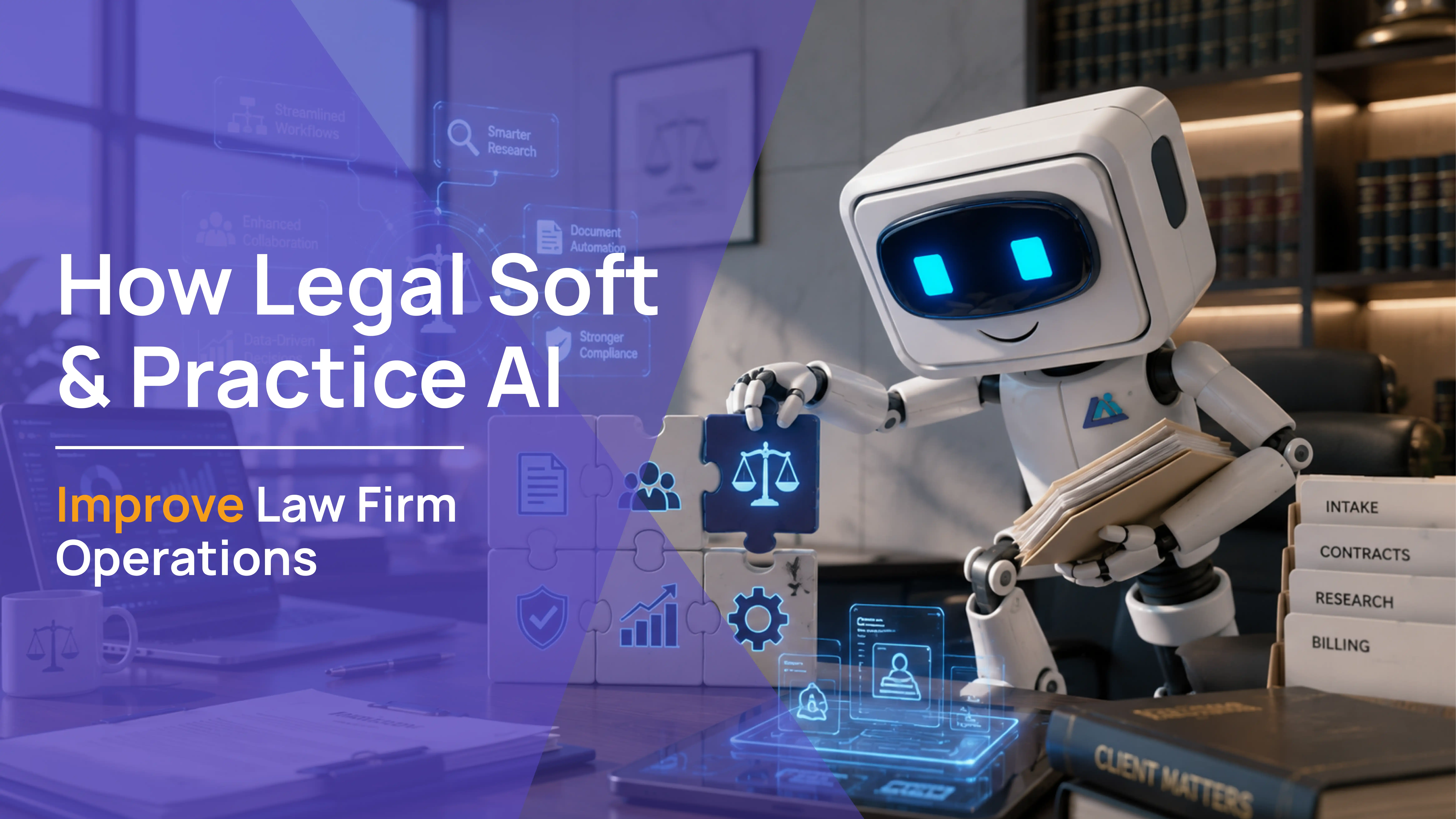
Legal Soft is a leading provider of legal process outsourcing (LPO) and virtual law firm solutions. Through its partnership with Practice AI, Legal Soft enables firms to:

  • Streamline demand letter creation using AI Demands™
  • Outsource legal research, case prep, and document processing
  • Leverage AI-powered workflows to reduce human error
  • Scale their legal practice efficiently

With Legal Soft’s expertise in legal staffing and Practice AI™’s cutting-edge automation, law firms can optimize workflows without hiring additional in-house staff.These services align perfectly with firms exploring AI for law firms and legal and professional services automation.

The Future of AI and Virtual Staffing in the Legal Industry

The combination of AI-driven legal automation and virtual legal support represents the future of law firm operations. By embracing AI-powered tools and remote staffing solutions, law firms can:

Improve demand letter accuracy and compliance
Increase efficiency and reduce manual labor
Enhance client satisfaction with faster case resolutions
Optimize cost savings and resource allocation

With Practice AI™, Virtual Staffing, and Legal Soft, law firms can stay competitive, scale seamlessly, and focus on winning cases instead of drafting documents manually.These solutions are especially valuable for attorneys looking for AI for personal injury lawyers in injury-related claims.

Sign Up and Transform Your Legal Practice Today!

Join the future of law firm automation. Sign up with Practice AI™ today and explore how our partnerships with Virtual Staffing and Legal Soft can help your firm thrive. Discover how AI Demands™ for personal injury lawyers and AI Demands™ for lemon law cases, along with AI Doc Summary™ for medical records, can revolutionize your practice.

Browse more blogs

AI in Law and Legal Practice: A Complete Guide for Plaintiff Firms

0
min read
April 29, 2026

Attorneys are not known for embracing change quickly, and for good reason. Legal work demands precision, confidentiality, and accountability. But the conversation around AI in law and legal practice has shifted from "should we explore this?" to "how far behind are we if we haven't started yet?"

For plaintiff personal injury firms specifically, AI is no longer a futuristic concept. It is a practical tool already changing how cases are prepared, how documents are drafted, and how attorneys spend their time. This guide breaks it down in plain terms so your firm can make an informed decision about where AI fits into your workflow.

Key Takeaways

  • AI in legal practice is most impactful in high-volume, document-heavy workflows like demand letter drafting, medical record review, and client intake.
  • AI does not replace attorney judgment. It handles the documentation layer so attorneys can focus on strategy, negotiation, and client relationships.
  • The firms getting the strongest results are not using the most AI tools. They are using a connected platform that spans the full case lifecycle.
  • Starting with AI does not require a complete technology overhaul. Most purpose-built legal AI platforms integrate with the tools your firm already uses.
  • Legal institutions from Stanford to Harvard are now actively studying and guiding responsible AI adoption in law, signaling how mainstream this shift has become.

What AI in Legal Practice Actually Means

AI in law and legal practice refers to software that automates document-heavy workflows without replacing attorney judgment. It is not about robots replacing attorneys. It is about software that can read, organize, analyze, and draft documents faster and more consistently than a human doing the same task manually.

In practical terms for a plaintiff firm, AI in legal practice shows up in a few distinct ways. It reads medical records and extracts the clinical details that matter for a demand letter. It organizes those details into a structured chronology. It drafts the letter itself based on verified case data. It tracks where each demand stands in the negotiation process. And it flags missing documentation before the letter goes out.

None of that requires an attorney to be less involved in the case. It requires the attorney to be involved at the right stages: reviewing the output, applying legal judgment, and signing off before anything leaves the firm.

Where AI Is Having the Biggest Impact for Plaintiff Firms

AI Legal Research and Case Analysis

AI legal research tools can scan case law, surface comparable verdicts, and identify relevant precedents in a fraction of the time manual research takes. For personal injury attorneys anchoring demand figures to local verdict data, this capability directly strengthens the negotiating position of every letter they send.

Traditional legal research requires an attorney or paralegal to manually search databases, read through cases, and assess relevance. AI legal research tools do this at scale, identifying patterns across thousands of cases and returning targeted results based on the specific injury type, jurisdiction, and damages profile of the current case.

AI in Law Firms: Document Drafting and Demand Letters

Demand letter preparation is one of the most time-intensive tasks in personal injury practice. A complex case can take three to five hours to prepare manually. AI drafting tools cut that time significantly by pulling structured case data and generating a clinically precise first draft that the attorney reviews and approves.

The output is not a generic template. Purpose-built AI in law firm platforms pull directly from your verified case documentation, including medical records, treatment timelines, wage loss figures, and liability notes, to produce a draft that reflects the actual case.

Client Intake Automation

The first 24 hours after a prospect reaches out often determine whether they become a client. AI-powered intake systems can conduct structured qualification interviews, collect incident details, flag liability indicators, and route cases automatically, without a paralegal manually working through each inquiry.

That time gets redirected to cases with stronger merit and clients who are already engaged.

Medical Record Review and Summarization

In complex cases, a single hospitalization can generate hundreds of pages of medical charts, notes, imaging reports, and billing records. Manual review is one of the largest time drains in plaintiff case preparation. AI tools trained on medical terminology can scan, extract, and summarize key findings in minutes, with attorneys reviewing and confirming the output before it is used in a demand letter. 

AI in Legal Practice vs. Traditional Workflows: A Direct Comparison

Workflow Traditional Approach With AI in Legal Practice
Demand letter preparation 3 to 5 hours per letter Under 20 minutes per letter
Medical record review 4 to 8 hours per case 1 to 2 hours per case
Client intake 45 to 60 minutes per prospect 15 to 20 minutes per prospect
Legal research Hours of manual database search Targeted results in minutes
Document organization Manual file management Automated tagging and retrieval
Statute of limitations tracking Manual calendar systems Automated alerts and flags

Research on AI in Legal Practice: What Law Schools Are Finding

Attorney reviewing documents beside an AI brain graphic connected to legal icons
  • The shift is well documented at the institutional level. Stanford Law School's Juelsgaard Clinic has published detailed guidance on the use of AI in legal practice, covering both the opportunities and the professional responsibility considerations attorneys must navigate.
  • Harvard Law's Center on the Legal Profession identifies AI as a structural force reshaping law firm business models, not just a productivity tool. Their research points to AI's impact on how firms price services, staff cases, and compete for clients.
  • Legal educators, including faculty at Vanderbilt Law School, have described AI as shifting the attorney's role from document processor to strategic advisor, with AI handling the research and drafting layer that previously consumed the majority of junior attorney time. 

How Law Practice AI Supports Plaintiff Firms

Law Practice AI is built specifically for plaintiff personal injury practices that want to apply AI across their full case workflow without switching between multiple disconnected tools.

The platform covers client intake, document collection, case summarization, demand letter drafting, and litigation support in a single connected system. Every AI-generated document goes through attorney review before it leaves the firm. Every case data point flows automatically between workflow stages so nothing has to be manually re-entered.

For firms evaluating AI in law and legal practice for the first time, Law Practice AI is designed to fit into your existing workflow rather than require you to rebuild it from scratch.

Frequently Asked Questions: AI in Personal Injury Law Firms

Q1: What does AI actually do in a personal injury law firm?

Q2: Is AI in legal practice accurate enough to trust?

Q3: Will AI replace attorneys at personal injury firms?

Q4: How long does it take to implement AI tools in a law firm?

Q5: What is the difference between general AI tools and legal-specific AI?

The Firms Moving Fastest Are Not the Biggest Ones

The personal injury practices gaining the most from AI in legal practice right now are not necessarily the largest firms. They are the ones that identified the highest-friction workflows in their practice, implemented AI tools designed for those specific workflows, and built attorney review into every step.

The starting point does not have to be a full platform implementation. It can be a single workflow: demand letter drafting, intake automation, or medical record review that demonstrates value quickly and builds the case for broader adoption.

Law Practice AI is built for exactly that starting point. See how it fits your firm's workflow.

Hamid Kohan and Practice AI™ Spotlighted in Enterprise Review Magazine for Legal Tech Innovation

0
min read

In a major milestone for innovation in legal services, Enterprise Review Magazine has featured Hamid Kohan, the visionary founder of Practice AI™, for his transformative impact on the legal technology sector. The article highlights how Practice AI™ is redefining how law firms operate by replacing outdated systems with AI-powered efficiency that is reshaping legal services.

At the heart of this recognition is Practice AI’s core mission: helping law firms streamline operations, increase efficiency, and scale sustainably. Through a process of artificial intelligence undressing that removes the layers of inefficiency bogging down traditional legal workflows, Practice AI™ empowers firms to operate with greater clarity and precision. Rather than racing toward rapid expansion, Practice AI™ encourages law firms to focus on strategic, data-driven growth—one intelligent step at a time.

A Visionary with a Purpose

Hamid Kohan launched Practice AI™ to address a glaring problem in legal operations: traditional law firms were stuck with manual processes and ineffective marketing, which AI for law firms solutions like Practice AI™ aim to solve. With a career spanning over four decades, Kohan brings unmatched insight into integrating automation and marketing strategies for real results.

Practice AI™’s core tools—AI Demands™ and AI Case Summary™—offer fully AI-based solutions that help law firms cut administrative tasks, reduce overhead, and enhance case outcomes. These tools are more than technological add-ons—they are embedded into each firm's operations to enable high-performance legal work at scale. 

Some great examples include AI demand letter generation to help firms automate the creation of personal injury demand letters, lemon law demand letters, and AI Doc Summary™, which provides AI records summary for lawyers, enabling personal injury lawyers and others to rapidly analyze complex data.

Practice AI™’s Impact on Legal Operations

Featured in the magazine for its client-centric, tech-forward approach, Practice AI™ is praised for:

  • Providing true legal practice intelligence and customized AI strategies for different practice areas.
  • Using real-time performance metrics to guide decision-making.
  • Empowering firms to expand into multi-state, multi-practice operations.
  • Offering multi-channel marketing strategies to support firm growth.
  • Delivering tailored AI demand letters and AI for personal injury lawyers across multiple practice areas.

Practice AI™ is not a law firm—it is a technology partner, an AI lawyer tool that integrates with legal teams to deliver process improvements from intake to settlement. The result: law firms deliver faster, smarter, and better legal services to their clients.

The Thought Leadership Behind the Technology

Beyond the tools, the magazine article also shines a light on Hamid Kohan’s role as a thought leader. His popular books, including How to Tune Up Your Law Practice and How to Scale Your Stupid AI Law Firm, offer practical advice for modernizing law practices in the age of automation, embracing AI law practice without losing their core identity.

His leadership philosophy is clear: embrace technology, focus on relationships, and always be ready to adapt.

Read the Full Feature on Enterprise Review

To explore the full interview and feature on how Hamid Kohan and Practice AI™ are revolutionizing legal operations, click here.

The Challenges California Law Firms Face If Demand Letters Are Not Completed on Time

0
min read

Demand letters play a crucial role in personal injury and lemon law cases across California, especially in busy legal hubs like Los Angeles. They set the stage for settlement negotiations, provide a legal basis for claims, and demonstrate an attorney’s commitment to advocating for their client. However, when these letters are delayed, California law firms face serious consequences, including missed opportunities, frustrated clients, and potential financial losses.

Attorneys in Los Angeles and throughout California are already managing heavy caseloads, and drafting demand letters manually can slow down the legal process. This is where automation becomes essential. AI Demands™, an AI-powered tool by Practice AI™, ensures demand letters are generated quickly, accurately, and in compliance with California legal standards, helping law firms stay on track and avoid unnecessary delays.

The Cost of Delayed Demand Letters in California

When California law firms fail to complete demand letters on time, they risk:

1. Missed Deadlines and Case Delays

Personal injury and lemon law cases in California often involve strict deadlines. Delayed demand letters can push back settlement discussions, leading to longer case timelines and dissatisfied clients. In worst-case scenarios, missing legal deadlines can result in forfeited claims, especially under California’s statute of limitations.

2. Reduced Negotiation Power

A well-crafted demand letter establishes the strength of a case early on. If it’s delayed, the opposing party may take advantage of the delay, prolong negotiations, or push for a lower settlement. Quick, well-documented demands demonstrate confidence and urgency, especially important in competitive legal markets like Los Angeles.

3. Client Dissatisfaction and Loss of Trust

Clients expect efficiency from their attorneys. A delayed demand letter can make a client feel neglected or question the competence of the law firm. For Los Angeles firms competing for referrals and positive online reviews, one bad experience can significantly impact reputation.

4. Increased Workload for Attorneys and Staff

When demand letters pile up, California law firms experience workflow bottlenecks. Attorneys and paralegals are forced to rush through drafting, increasing the likelihood of errors. This extra workload leads to burnout and reduced overall efficiency.

5. Potential Revenue Loss

California law firms depend on settlements to generate revenue. The longer it takes to submit demand letters, the longer it takes to receive settlements, impacting cash flow and firm profitability.

How AI Demands™ Solves These Challenges for California Law Firms

AI-powered legal tools like AI Demands™ eliminate drafting delays and ensure demand letters are submitted on time. Here’s how:

1. Automated Drafting for Faster Turnaround

Instead of spending hours manually drafting demand letters, AI Demands™ generates high-quality letters in minutes, allowing Los Angeles attorneys to submit claims faster and keep cases moving.

2. Compliance with California Legal Deadlines

AI Demands™ ensures letters align with jurisdictional requirements across California, reducing the risk of missed filings or technical errors.

3. Improved Accuracy and Legal Consistency

By using AI-driven legal intelligence, demand letters are free from common drafting errors. The tool incorporates case facts, legal references, and persuasive language automatically, aligned with California laws and regulations.

4. Scalable Solution for High-Volume Law Firms

Law firms in cities like Los Angeles that handle multiple cases simultaneously can easily scale their practice by automating demand letter creation. AI Demands™ allows attorneys to focus on legal strategy rather than time-consuming drafting.

5. Enhanced Client Satisfaction

With quicker demand letter turnaround times, clients in California receive faster case resolutions. Happy clients lead to more referrals, positive reviews, and a stronger reputation for the firm.

How AI Demands™ Solves These Challenges

AI-powered legal tools like AI Demands™ eliminate drafting delays and ensure demand letters are submitted on time. Here’s how:

1. Automated Drafting for Faster Turnaround

Instead of spending hours manually drafting demand letters, AI Demands™ generates high-quality letters in minutes—allowing attorneys to submit claims faster and keep cases moving.

2. Compliance with Legal Deadlines

AI Demands™ ensures letters align with jurisdictional requirements and legal deadlines, reducing the risk of missed filings or technical errors.

3. Improved Accuracy and Legal Consistency

By using AI-driven legal intelligence, demand letters are free from common drafting errors. The tool incorporates case facts, legal references, and persuasive language automatically.

4. Scalable Solution for High-Volume Firms

Law firms handling multiple cases simultaneously can easily scale their practice by automating demand letter creation. AI Demands™ allows attorneys to focus on legal strategy rather than time-consuming drafting.

5. Enhanced Client Satisfaction

With quicker demand letter turnaround times, clients receive faster case resolutions. Happy clients lead to more referrals, positive reviews, and a stronger reputation for the firm.

AI Demands™ vs. Manual Drafting: A Performance Breakdown

Challenge AI Demands™ Solution Manual Drafting Issue
Speed Generates letters in minutes Takes hours or days
Accuracy Uses built-in legal intelligence Prone to human error
Deadline Compliance Keeps cases on schedule Risk of delays
Cost Efficiency Reduces labor costs Requires more staff time
Client Satisfaction Faster results, happier clients Frustrated clients due to delays

Don’t Let Delays Cost Your California Firm, Automate with AI Demands™

Law firms in Los Angeles and throughout California can’t afford to let demand letter delays impact their case outcomes, client satisfaction, or revenue. AI Demands™ ensures that demand letters are drafted quickly, accurately, and in compliance with California legal standards, helping firms avoid unnecessary setbacks.

✅ Increase efficiency
✅ Meet California legal deadlines
✅ Reduce workload and burnout
✅Maximize client satisfaction

Sign up with Practice AI™ today and discover how AI Demands™ can transform your demand letter process in California.

FAQS

1. Why are demand letters important in personal injury and lemon law cases?
2. What happens if a law firm delays sending demand letters?
3. How does AI Demands™ help prevent demand letter delays?
4. Is AI Demands™ customizable for different case types?
5. Can AI Demands™ integrate with my law firm’s existing systems?
6. How accurate is an AI-generated demand letter?
7. Will using AI Demands™ reduce the need for human oversight?
8. How can AI Demands™ improve client satisfaction?
9. Is AI Demands™ suitable for high-volume law firms?
10. How do I get started with AI Demands™?